
Immagini per progetti
| Nome | Immagine | descrizione | in Progetto |
|---|---|---|---|
| Water performance |

|
The visionary Bullitt Foundation commissioned the world’s first mid-rise commercial building and public open space to meet the Living Building Challenge. The Bullitt Center and adjacent McGilvra Place Park now serve as a model for building and exhibiting innovative and ecologically sensitive design and green infrastructure. To achieve Net Zero Water engineers and landscape architects created an innovative water system that loops rainwater catchment and wastewater disposal into onsite constructed wetlands and rain gardens to store, purify and recharge water to the landscape. The plant palette provides a softened foreground to the building structure while working hard to cleanse and manage stormwater, thrive in the urban environment, and express how urban ecology is integral to supporting the building’s systems. A native plant palette bridges the functional benefits for the landscape while recalling the site’s original landscape.
RAINWATER HARVESTING Like a Doug fir forest, the Bullitt Center re-uses water and returns excess to the soil.
The Bullitt Center is designed to help restore the ecological processes of the site back to they way they functioned hundreds of years ago when it was a Douglas fir forest. Like a forest, the Bullitt Center must use only the water it can collect onsite. Below the solar panels, a parapet roof captures rainwater and brings it to downspouts that carry the water to a 56,000-gallon, concrete cistern in the basement. On its way down, the water is funneled through a vortex filter, which removes large particulates. Next to the cistern is a “day-use tank” that holds 500 gallons of clean, potable water. To create the potable water, the rainwater is filtered through ceramic filters before being passed under ultraviolet light; a small amount of chlorine is added at the end.
REYWATER SYSTEM COLLECTION & RE-USE The project re-uses greywater and infiltrates it back into the ground.
Denis Hayes, the leader behind the Bullitt Center, often compares the building to the Douglas fir forest that once covered the site before settlement by Europeans. With respect to water, the forest would retain, metabolize, and then slowly release the water that falls on its site. When the composting toilet system was in use (2013-2020), greywater was used solely to recharge the aquifer under the building. With the introduction of a vacuum-flush toilet system, greywater is now treated and used to flush toilets. Greywater is also diverted into the constructed wetland on the third level before being infiltrated into the ground to help recharge the aquifer. Before greywater is used to flush toilets, it is treated in a three-stage filtration process, followed by a two-stage ultra-violet light disinfection process. The vacuum-flush toilet system uses .4 gallons of treated greywater per flush, which is 70% less water than the average flush toilet. For greywater diverted to the constructed wetland, it passes through layers of porous gravels and soils. Horsetails, or equisetum, are used as the primary plant for their hardiness and ability to thrive in Seattle’s climate. The water is pumped through a series of drip lines so that the plants can absorb the nutrients. It is then collected and pumped through the system several more times until the nutrients have been absorbed and it is safe to release in the bio-swales along the western edge of the site. In the bio-swales, the water filters down through 20 feet of gravel before it is deposited into the water table. Functioning similar to the Douglas fir forest, this catch and slow release of water allows the Bullitt Center to restore 61% of the water to the ecosystem either through ground infiltration or evaporation, and mitigate stormwater during and after rain events.
VACUUM TOILETS Highly efficient vacuum system.
After seven years, the Bullitt Center removed its innovative composting system and replaced it with a vacuum flush system. The vacuum flush system is highly efficient, using just .4 gallons of treated greywater per flush. The vacuum pumps pull waste through a grinder to eliminate problematic solids before moving them into a collection tank. From the collection tank, waste goes into the King County sanitary sewer for treatment. Like in the composting system, solids from the sewage treatment plant are converted into a human “bio-solid” called “Loop,” which can be used as a fertilizer.
|
Bullitt Center |
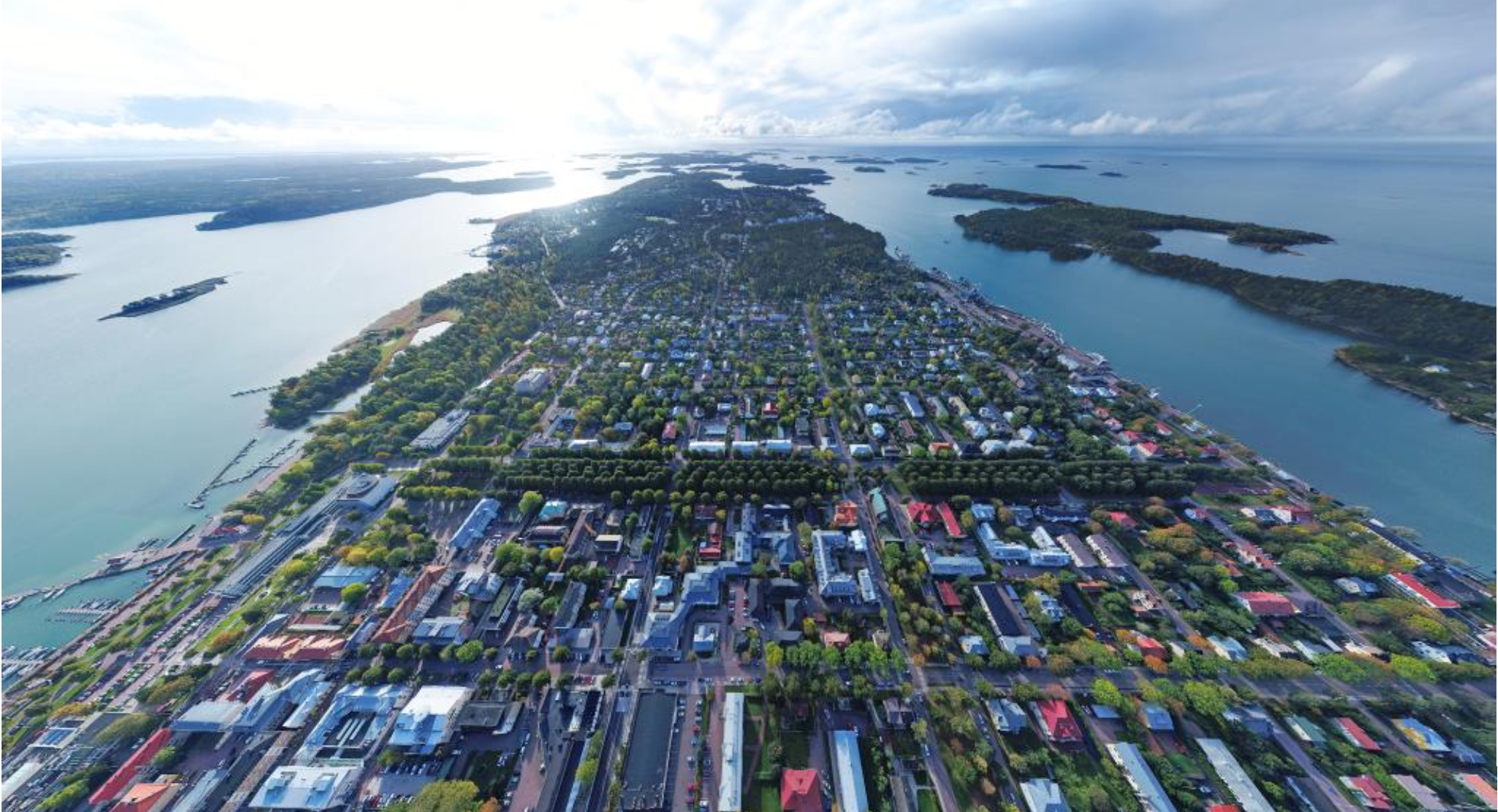
| Smart Energy Åland_1 |
|
||
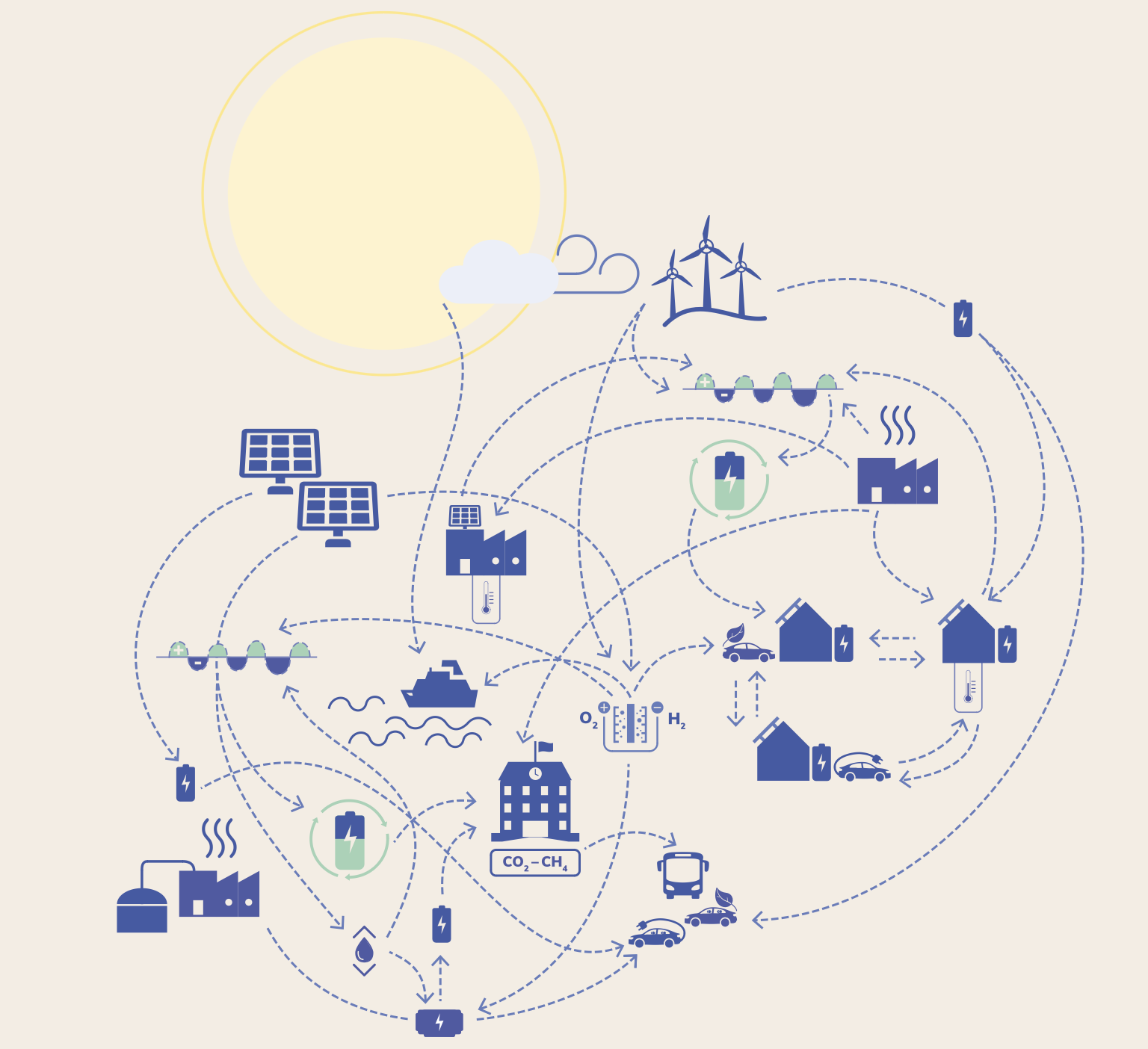
| Smart Energy Åland |
|
||
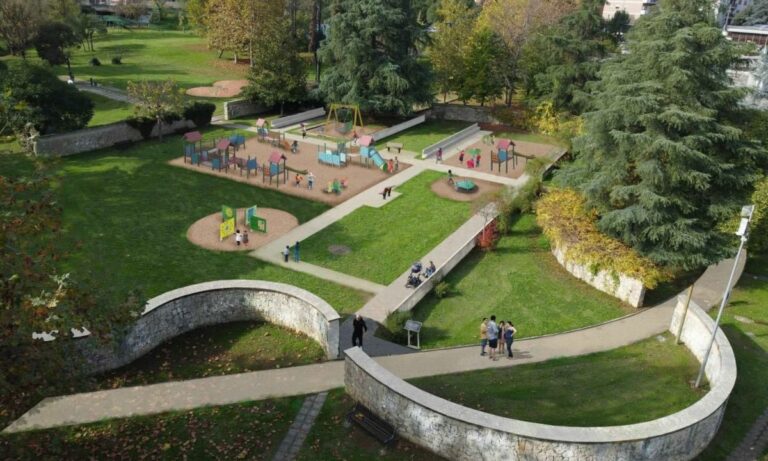
| Rende investe nella sostenibilità |
|
descrizione dell'immagine |
|
| Pista ciclabile a Quattromiglia |

|
descrizione dell'immagine |
|
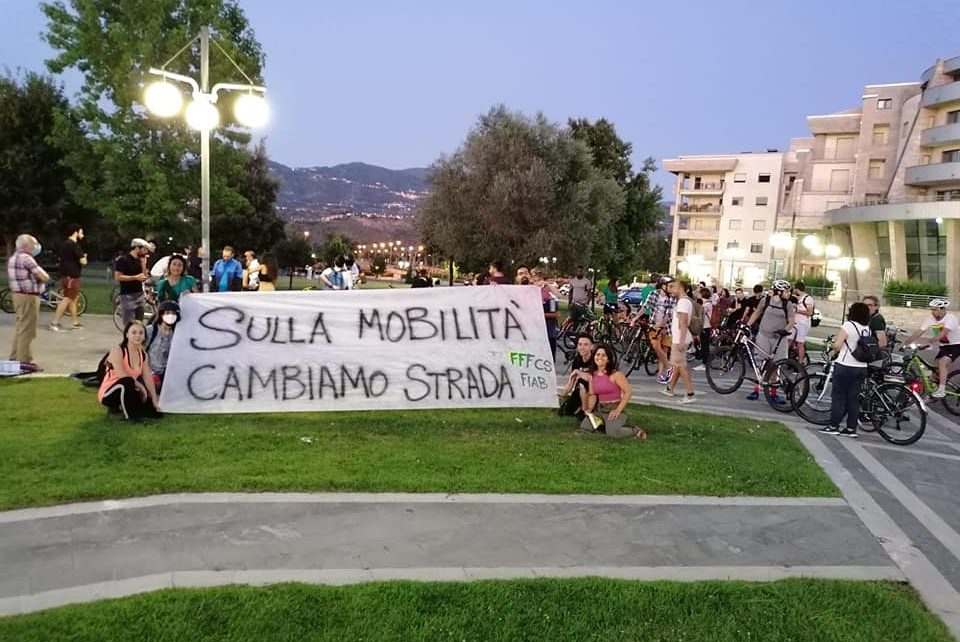
| Pedalata da Cosenza a Rende |
|
descrizione dell'immagine |
|
| NRDC_ Place petal |
|
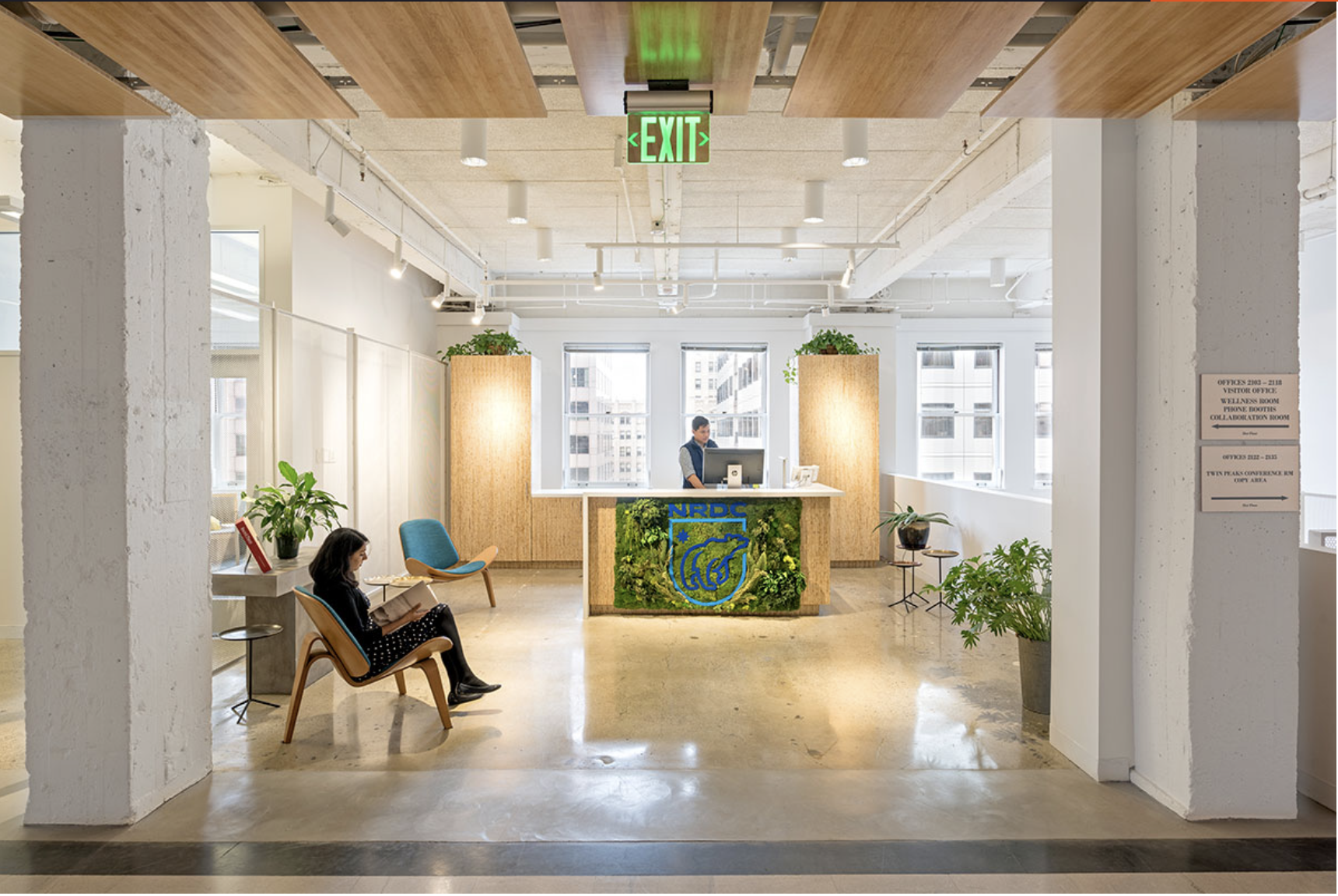
The Natural Resources Defense Council has a long history in the Bay Area of California. A New York based not-for-profit, NRDC became bi-coastal in 1972, just 2 years after its founding. Almost four decades later, NRDC’s northern California office is located in the financial district of San Francisco in the Hunter-Dulin building. Completed in 1927, the building stood as the fourth highest building in the city at the time. The famous Schultze and Weaver, known for the design of New York’s Grand Central Terminal and many major hotels of the 1920s, were hired to design the prestigious office building. Complete with Romanesque and French Chateau ornamentation, such as the 38-foot high mansard roof sporting both dormers and gables, the iconic building was first known as the west coast headquarters of the National Broadcasting Company between 1927 and 1942. It also housed the fictional offices of Sam Spade, the private detective and protagonist of Dashiell Hammett’s 1930 novel, The Maltese Falcon. As a registered historic building, the Hunter-Dulin is symbolic of reuse, subject to the frequent reimagining of space by a wide range of tenants. Recognizing the value in the space NRDC occupied since 2004, the concept of reuse was embraced eleven years later in retrofitting the office on the 20th and 21st floors. Therefore, the project falls under the previously developed category for site condition. NRDC holds a 10-year lease with extension options with the Hunter-Dulin Building and plans to remain in the currently occupied space for a minimum of that time period. The office was designed with growth, and the ability to densify and share space in mind. |
Natural Resources Defense Council – San Francisco Office |
| NRDC_ Materials petal |
|
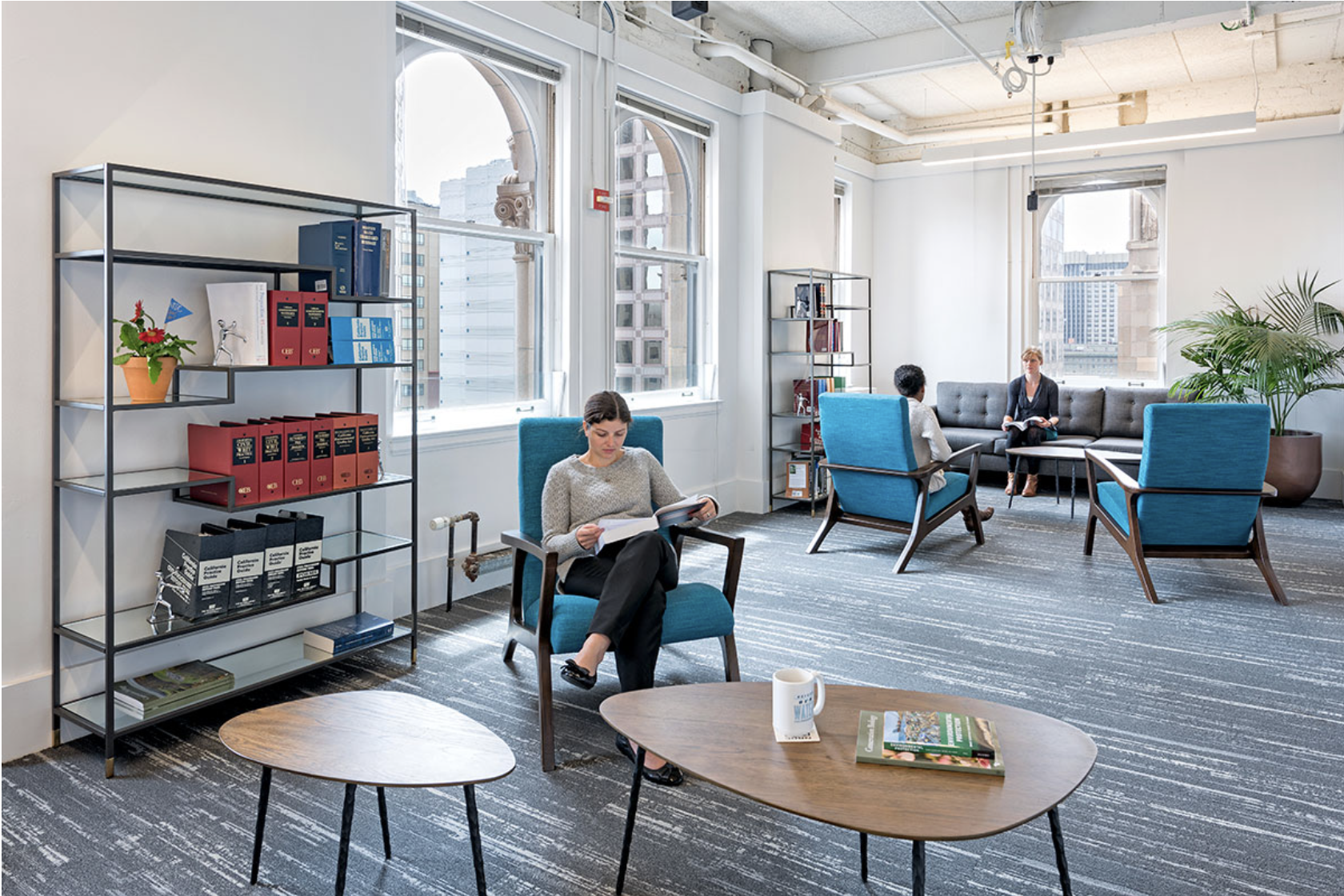
The decision to pursue the Materials Petal was decided at the very outset because the Energy and Water Petals would not be possible in this commercial interior space. The project is one of the first to pursue Living Building Challenge v3.1 – the latest available version of the standard at the time – therefore there were not many projects from which to to draw experience. Fortunately, NRDC’s Midwest Expansion, completed around the time that construction began in San Francisco, gave the team a list of products with which to start. Still, there were many nuances to this project, such as team dynamics, building conditions and manufacturer locations that made additional research and creativity necessary. Extensive vetting of products was conducted throughout the design phase and through the submittal process into the construction phase. The team developed a cohesive system of product approvals between the LBC consultant, the LEED consultant, the architect, the contractor, the subcontractors, and the owner. When the team needed to purchase new materials, they searched first for products with recycled material content or products salvageable from other sites. For instance, NRDC was able to purchase used office chairs and reupholster them with fabric that had been left over from a larger project. The team prioritized products with Declare labels as well as products with other certifications like HPDs and EPDs. An extra effort was made to choose any new products that were manufactured close to the project site. For example, a large percentage of new lighting fixtures were made 578 km from the office site. Reducing waste was also high on the priority list. Strategies to prevent waste, including what was taken out of the original office, were explored as early as the programmatic phase. The office is designed for flexibility in an effort to consider the project’s end of life. Modular systems, such as the PK-30 glass partition system, were chosen so that they can be easily deconstructed when NRDC moves out. Construction waste was sorted on site and nearly all of it was diverted from landfill. Throughout the operation of the office, NRDC will maintain a Red List-free and healthy space. If materials need to be replaced, they will uphold the standards of the Materials Petal. Ongoing office waste is reduced by recycling and composting.
Red list imperative One of the most challenging Red List items to avoid in this project was hexavalent chromium, an addition to the LBC 3.0/3.1 Red List. The team found that among other materials, almost all galvanized steel contains intentionally added hexavalent chromium as an anti-corrosive. It can be found in most metal conduit, ductwork, electrical panels, exhaust fans and many other products that contain steel components. The team was able to buy hexavalent chromium-free conduit from Western Tube, which treats their galvanized metal with a Red List-free organic paint. For some galvanized metal products, no compliant alternatives were found. When this happened, the team chose the option that met the most other Materials Petal requirements and advocated to manufacturers to remove hexavalent chromium from their process. |
Natural Resources Defense Council – San Francisco Office |
| NRDC_ Materials petal |
|
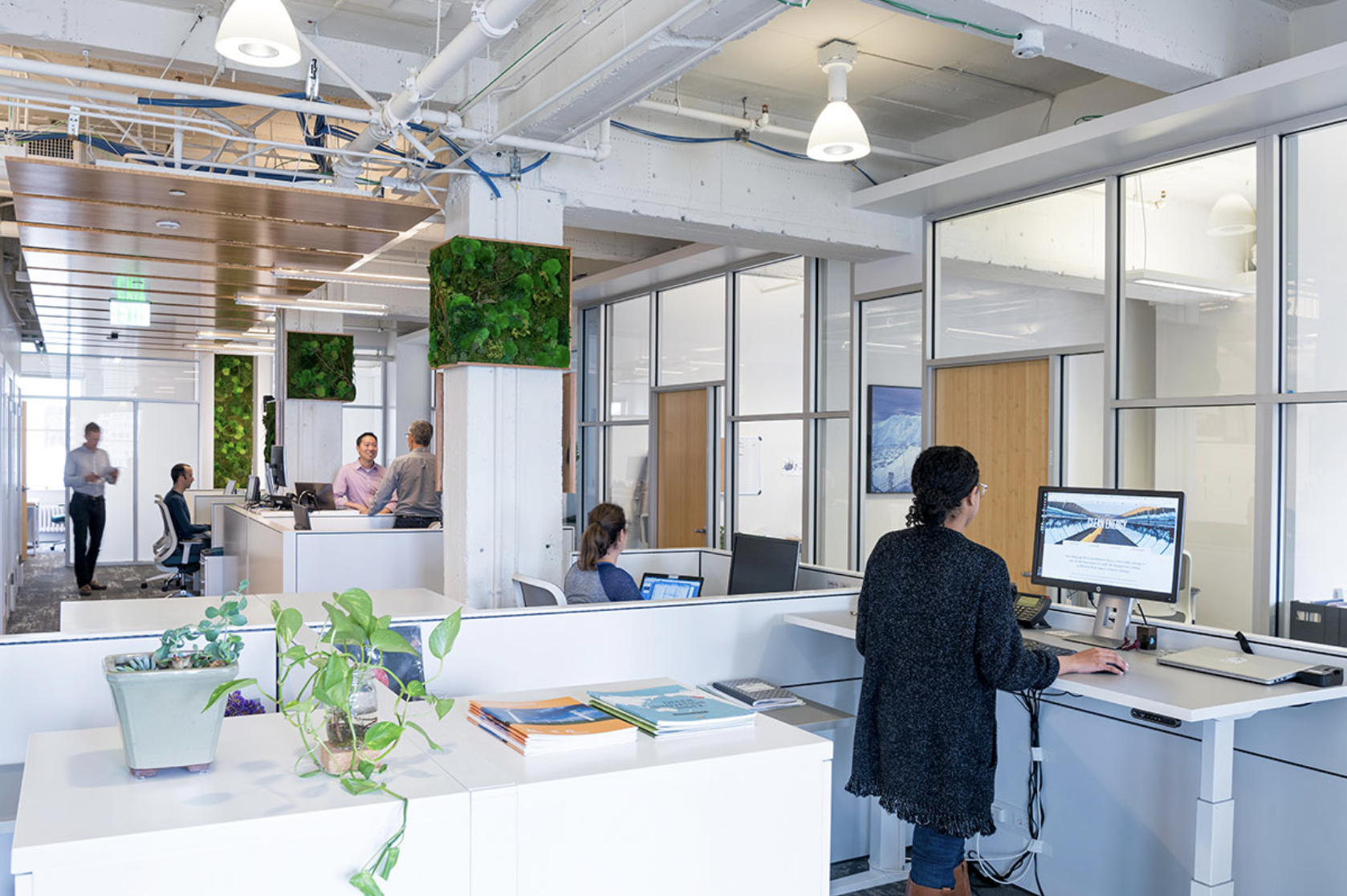
EMBODIED CARBON FOOTPRINT IMPERATIVE From as early as program design, the team strategized ways to reduce the project’s embodied carbon. Because the project is a retrofit, the concept of reusing existing materials and finding salvaged products was embraced. This reduced the number of new products that needed to be created for the project, reducing the carbon footprint. The reuse of materials on-site resulted in fewer transportation related emissions. While the team aimed to reuse what they could, another noteworthy element of the office is its simplified design, which helped in reducing the project’s carbon footprint. Minimizing the number of materials used lessened the need to create new products with virgin materials. When new materials were needed, as much as possible was purchased from local manufacturing facilities. More than 50% of the construction budget was spent on products that were assembled within 1000km of the project, resulting in materials that travelled shorter distances to the site and contributing to a lower carbon footprint. EMBODIED CARBON FOOTPRINT – 49.6 TCO2e AMOUNT OFFSET – 58 tonnes of Green-e Climate Certified Carbon Offsets PROJECT – Green-e Climate Landfill Gas Carbon Offset PROVIDER – Renewable Choice Energy WEBSITE – http://www.renewablechoice.com/ CARBON CALCULATOR – Environment Agency Carbon Calculator for Construction Activities
RESPONSIBLE INDUSTRY IMPERATIVE Materials met high standards of sustainable resource extraction and fair labor practices where possible to support not only the goals of this project, but also the mission of NRDC as an organization. All wood products, as well as the millshops the wood came from, are FSC certified. The team advocated for responsible mining and steel resource extraction when no third party certifications were available. The stone industry has recently developed a third party extraction standard. Therefore, the team advocated to 8 of the standards’ affiliate organizations, encouraging them to adopt the new standard. Many of the manufacturers of products used in the project were based in the US, which not only helped with sourcing requirements, but in this case, also guaranteed a higher level of labor practices as a result of strict US labor laws. WOOD SOURCES: Forest Stewardship Council (FSC) Certified wood, Salvaged wood
NET POSITIVE WASTE IMPERATIVE The team prioritized conservation management throughout all phases of the project, from the pre-building audit, through design and construction and into operations. In designing the space, end of life was kept in mind to make sure that materials could be reused or recycled. Recycling materials and reducing waste were high priorities throughout design and construction. The San Francisco project is unique in that it reuses a large percentage of the materials that were already present in the space prior to the renovation. These include doors, flooring, some lighting, the HVAC system and more. Through strategic design and implementation, the project team was able to reuse at least 10% of the materials construction budget rather than buying new products. This saves virgin resources and also reduces the cost to buy new materials. By refurbishing many of the reused items, the office still feels fresh and new. GCI General Contractors and their subcontractors made every effort to order only the dimension or count required for installation in the NRDC space. GCI contracted Recology to collect construction waste and divert it offsite. The NRDC San Francisco Office is conscious about its energy consumption and waste generation. The office was designed with the infrastructure to facilitate energy monitoring and waste diversion. Throughout design and construction, the team kept the end of life of the space in mind. One of the biggest efforts was the design for deconstruction and reuse at the end of the lease. Not only was removal important, but also the durability of materials, enabling them to be reused easily. |
Natural Resources Defense Council – San Francisco Office |
| La Fleuriaye West_6 |
|