BILL FISCH FOREST STEWARDSHIP AND EDUCATION CENTRE
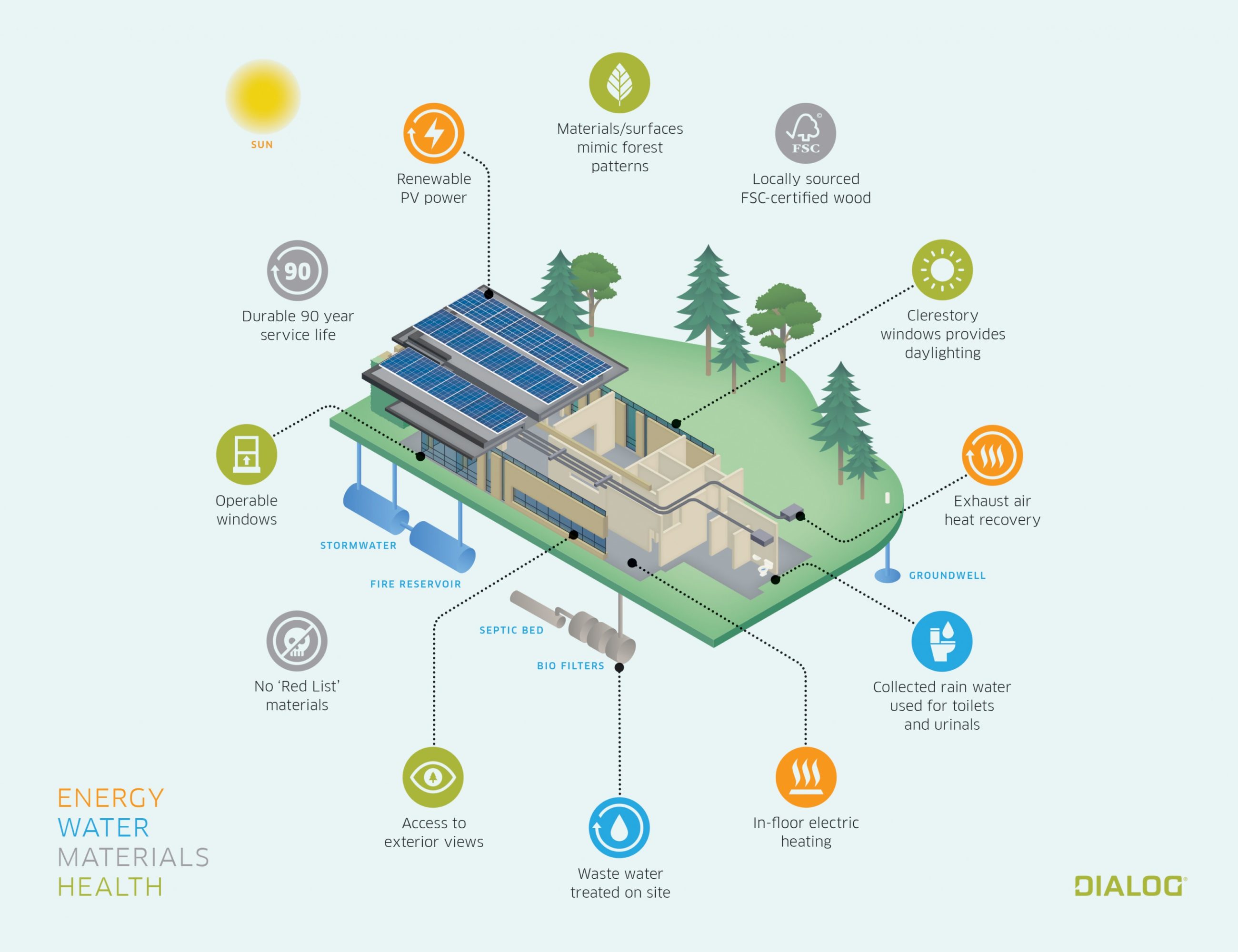
The BFFSEC, located in Canada and completed in 2016, is part of a successful forest regeneration project striving to help residents and educate on the importance of natural resources. The DIALOG Project Team, Regional Municipality of York and Natural Heritage and Forestry team worked in collaboration to create a design that meshed well with the surrounding natural environment, following the Living Building Challenge Petal Imperatives. The building was seen as being ‘of the forest’ and not ‘in the forest.’
Four key ideas were followed throughout all phases of the project:
- Energy: the facility runs on solar panels
- Water: the facility collects rainwater and treats it, returning it as clean as when it arrived in the facility
- Place: the facility reflected the landscape around it
- Beauty: the facility provides biophilic beauty and an opportunity to connect with the natural world
SITE
From the construction phase, the building was connected with its exterior habitat. The structure was designed for an almost 100-year lifecycle, and was constructed on a previously developed site surrounded by a 90 year old forest. The configuration of spaces are designed to support interaction and collaboration in a natural setting. The facility features an outdoor classroom in the centre of a woodland garden. Sufficient stormwater management allows for the surrounding soil to remain in its natural condition. Planting approaches for the site were based on the native species in the area, in order to enhance and complement the surroundings. A map of Regulated Areas from the Lake Simcoe Region Conservation Area (LSRCA) was used to confirm that the site was not disturbing important environments, such as the 100-year flood plain.
Although the site does not include any agricultural land, York Region is planning for education on agriculture and ongoing partnerships with local farms.
York Region created a program in charge of Environmental Land Protection and Preservation. The goal is to protect natural areas, with a target of a minimum of four sites or 60 hectares of land annually. Another key partnership is with national conservation organisations in Canada.
CAR FREE LIVING
The facility provides a small amount of parking for public use. The York Region encourages public transit, cycling and carpooling. Through the development of a transportation demand management plan to reduce single occupancy vehicles, the Region has set a target for a reduction of 33%.
WATER
Natural aquifers on the project site provide sufficient water for the facility. The building is connected to two wells, one existing and one new, which meets the potable water demands. For non-potable water, groundwater and rainwater is collected on the roof and drained into a cistern. Water systems include:
- Well water supply system with non-chemical treatment
- Rainwater harvesting system
- Pumping and treatment devices
- Low-flow plumbing fixtures
- Waterloo biofilter wastewater treatment device
- SWM infrastructure
ENERGY
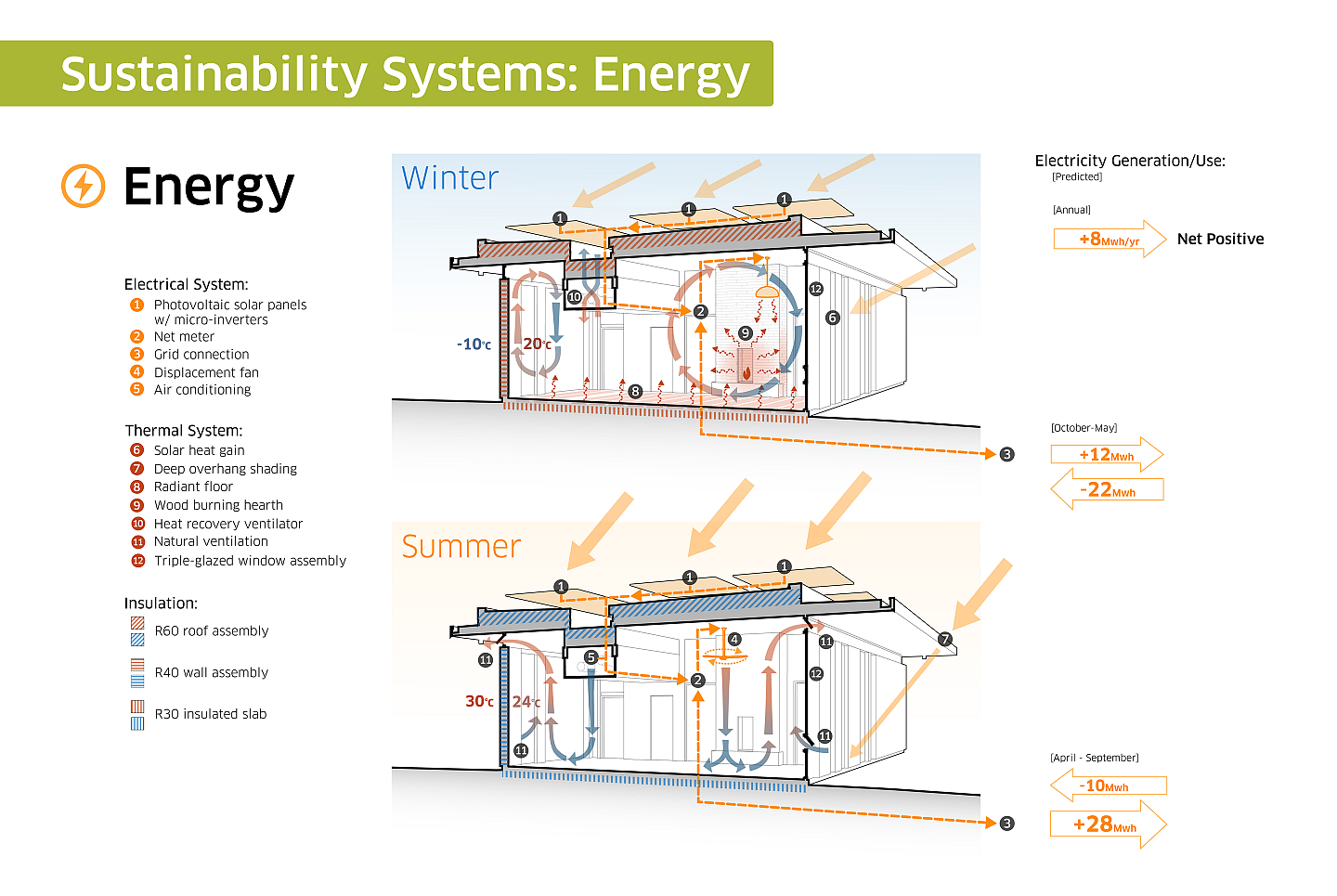
The BFFSEC is designed as an Net Positive Energy building. It generates more clean energy on the project site than is used over the year. Heating is supplied through radiant slab heating, and the multi-purpose room is equipped with an air source heat pump that provides heating indoors. Cooling relies on strategically placed windows to maintain internal comfort, which are automated to open once the outdoor air temperature exceeds 10 degrees celsius. Tankless hot water heaters are used for washrooms, the kitchenette and mechanical room. LED lighting is monitored with occupancy sensors and daylight controls.
Roof = RSI value 12.3m²K/W
Wall = RSI value 7.4m²K/W
Slab = RSI value 1.8m²K/W
Glazing = Triple-pane and argon filled. Fixed U-value 0.91W/m²K and operable U-value 1.2W/m²K
The site was deemed not suitable for wind or geothermal uses. For PV panels, several location were reviewed, and the following goals were determined:
- Sufficient capacity to meet the building energy use target (Net Positive)
- Minimise environmental disruption
- Optimise system output and minimise impacts from local effects (e.g. PV panel shading)
- Provide visibility, accessibility, and ‘teaching moment’ for visitors to the site
It was decided that roof-mounted PV panels would be the most suitable. The annual on-site renewable energy exported by the system is approximately 44 MWh per year.
HEALTH
The building was designed, from the initial stages, to incorporate healthy living. The use of materials and windows gives a sense of being submerged into nature. Vision glazing, clerestory and floor-to-ceiling vertical panels allows light to enter the building and offers unlimited views.
ASHRAE 62.1-2010 was used as the minimum requirements for ventilation. All zones are equipped with sensors to monitor temperature, humidity, and CO2 to ensure adequate air quality and comfort conditions.
The entrance to the building is constructed in order to remove as much dirt as possible. The exterior metal floor grille, interior floor mat, and entrance vestibule ensure that no dirt from shoes enters the facility. Smoking is prohibited on the entire project site.
BIOPHILIA
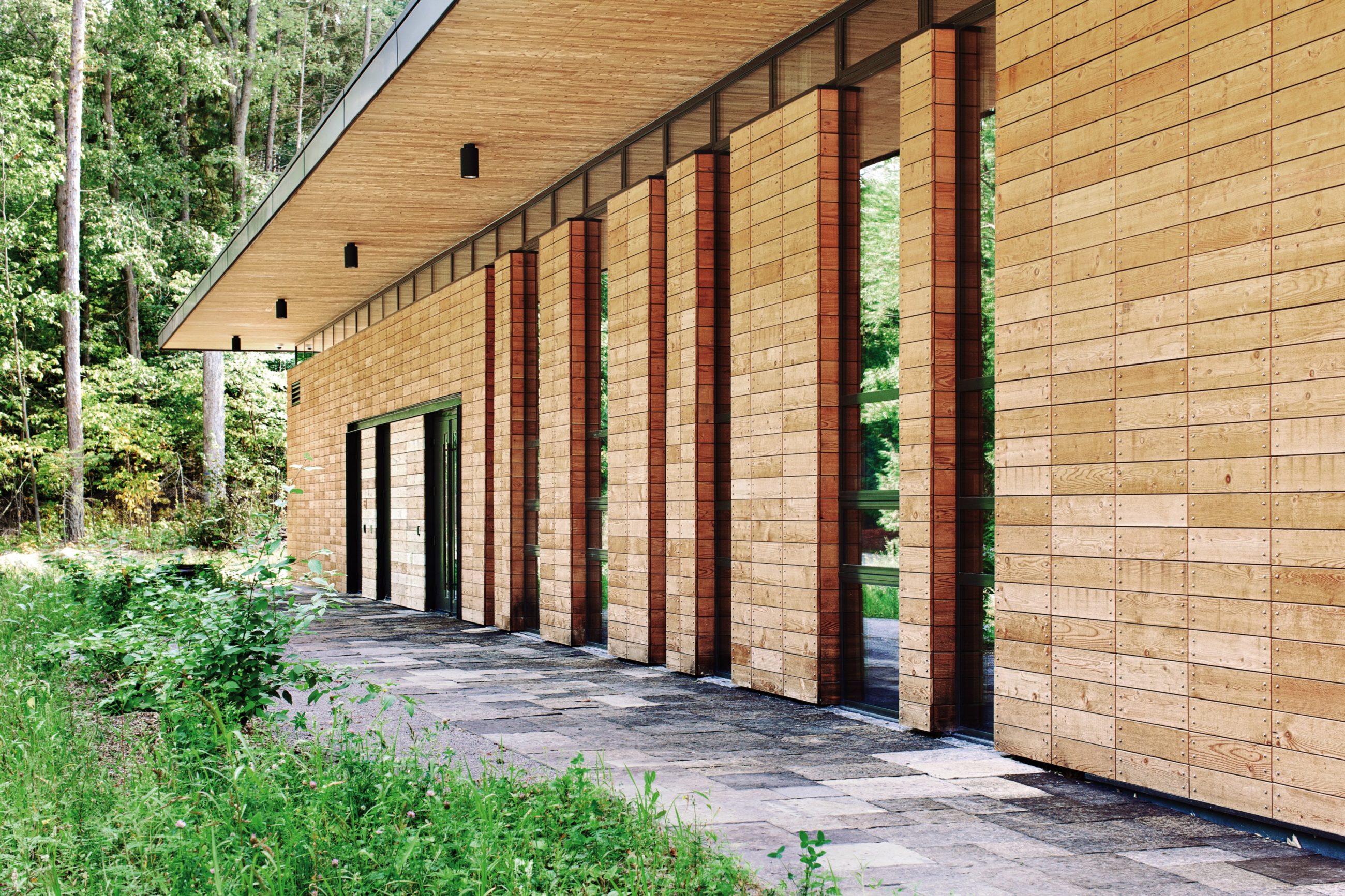
The main cladding material is reclaimed Douglas fir, which represents the trees surrounding the facility. Other portions are clad in limestone, representing the earth that is also part of the forest ecosystem. In regards to form, the building mimics a tree, with the roof protruding as a canopy. It offers shade and shelter on the exterior as well as interior.
MATERIALS
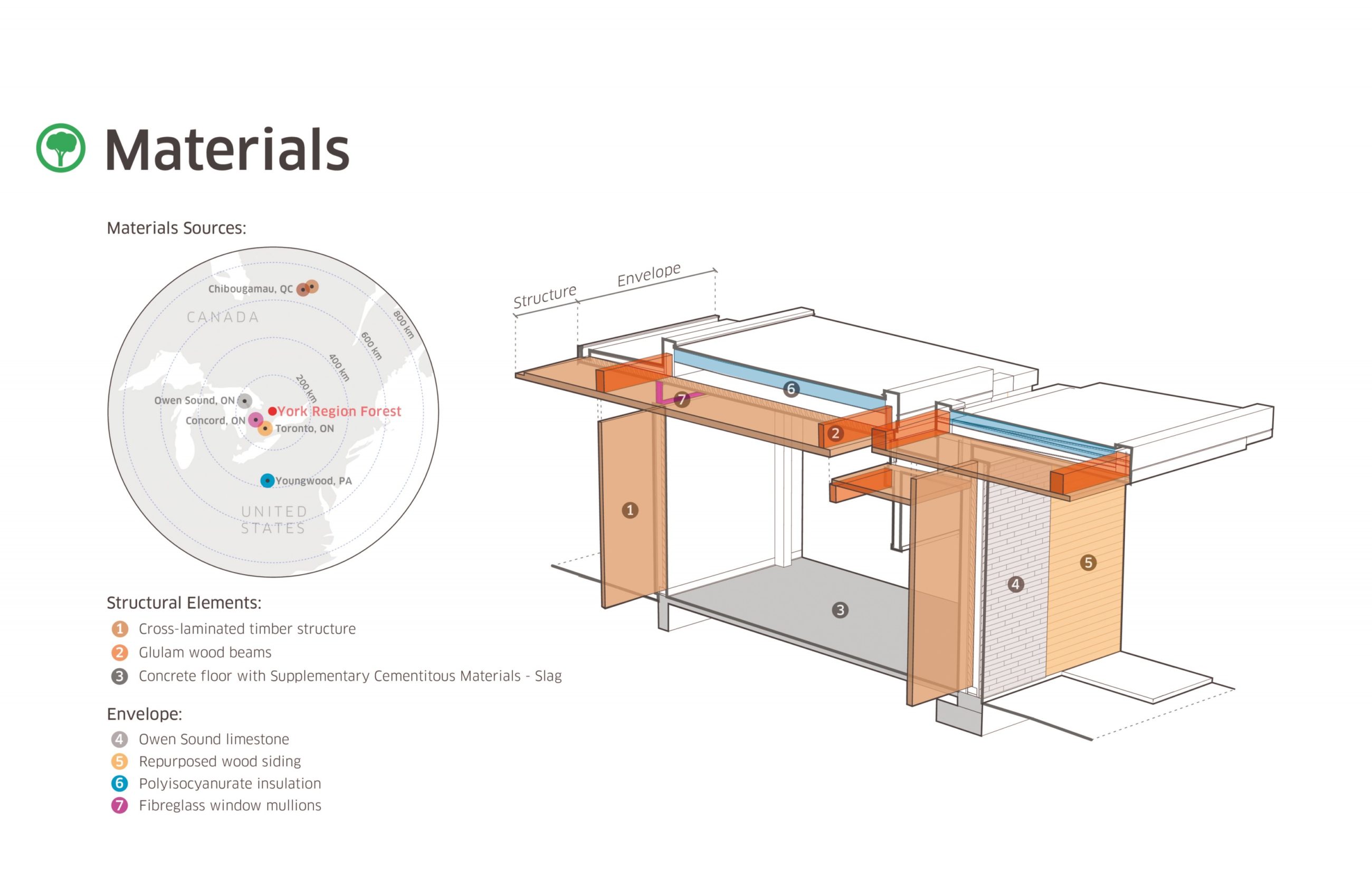
Most materials used on this project were available and extracted within the maximum distance of their zone designations. Some issues were found with availability of plywood, and therefore it had to be sourced from Oregon. This aids in supporting the local economy and reduces energy impacts of transportation. The building is constructed from CLT wall panels, CLT roof decks and Glulam columns. The goals of the design were:
- Minimise the environmental footprint of the building with a focus on embodied carbon
- Use natural and indigenous materials that reflect the heritage of the site and Great Lakes Basin
- Provide a durable, flexible and adaptable building that will last 90 years
- Use materials and assemblies that can be deconstructed at the end of life
- Create a high-performing envelope that is well-insulated and air tight
- Transform the industry by requiring transparency and disclosure and excluding worst-in-class materials found on the ‘Red List’
EQUITY
The site spaces are designed to be inviting, and support interaction and collaboration. The BFFSEC is meant to represent a forest, and work like a forest: accessible regardless of gender, race, class or physical ability. While it is not a public building, it is made available to members of the community throughout the year. York Region provides a ‘Nature’s Classroom’, an educational program in York Regional Forest that features the Living Building Challenge. Some programs are paid classes, while others are free of charge. Participants include school groups, scouts, seniors, naturalists and persons with disabilities. The building is designed to be accessible to all people of society, and meets the standards of the Access for Ontarians with Disabilities Act.