
 BERTSCHI LIVING BUILDING SCIENCE WING
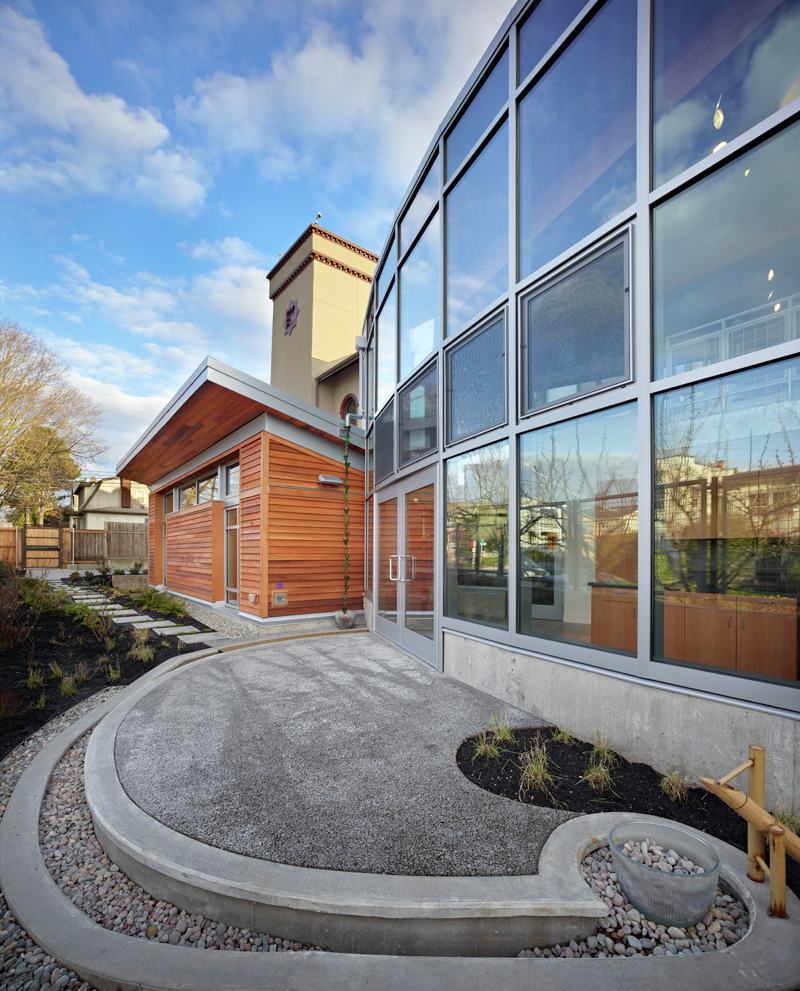
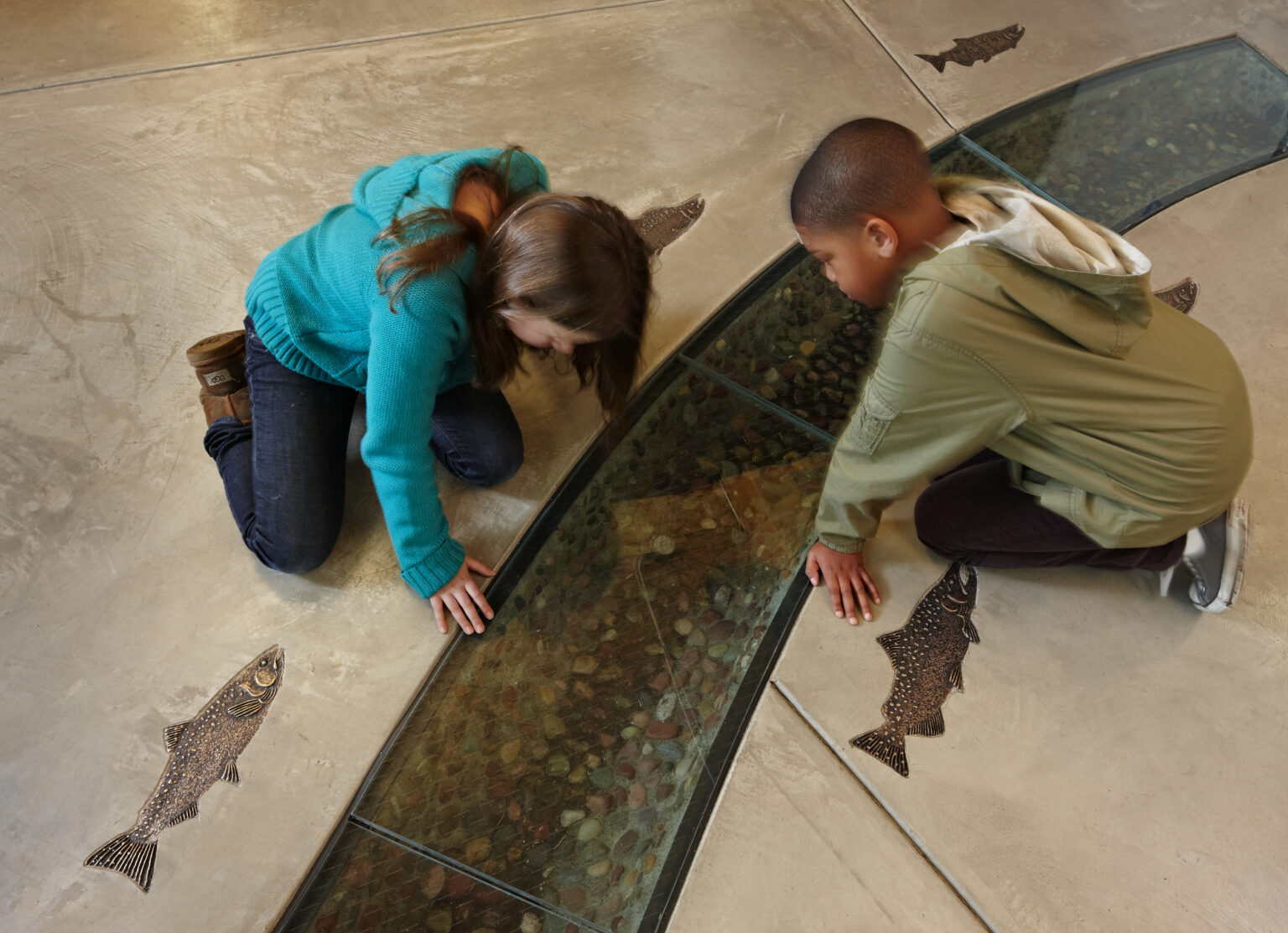
The Living Building Science Wing at the Bertschi School is the first certified ‘Living Building’ in Washington State, and follows the Living Building Standard 2.0. KMD architects finished construction in 2011. The building serves as a science classroom for kindergarten to fifth grade students. The space is divided into three areas: classroom, greenhouse and garden space. The process shows the importance of connecting children with nature not only for wellbeing, but also for learning experience. Students were involved in the design process, as they were asked how they wanted to see nature in their classroom. Some requests included a river running through the classroom, views of the sky and a greenhouse. These became integral elements of the final design. The ‘river’ is the central system of the rainwater collection, and the entire site is filled with native plant species.
CONSTRUCTION
The building envelope is formed from a wood stud framed wall and environmentally safe insulation, FSC certified and regionally sourced wood. Insulated curtain walls and storefront systems were featured to provide a low u-value and high transmittance of visible light.
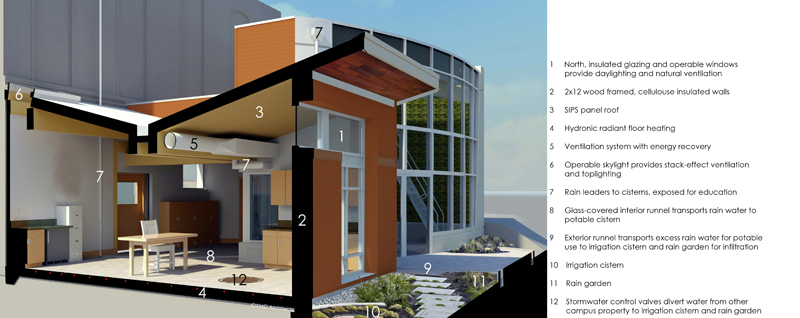
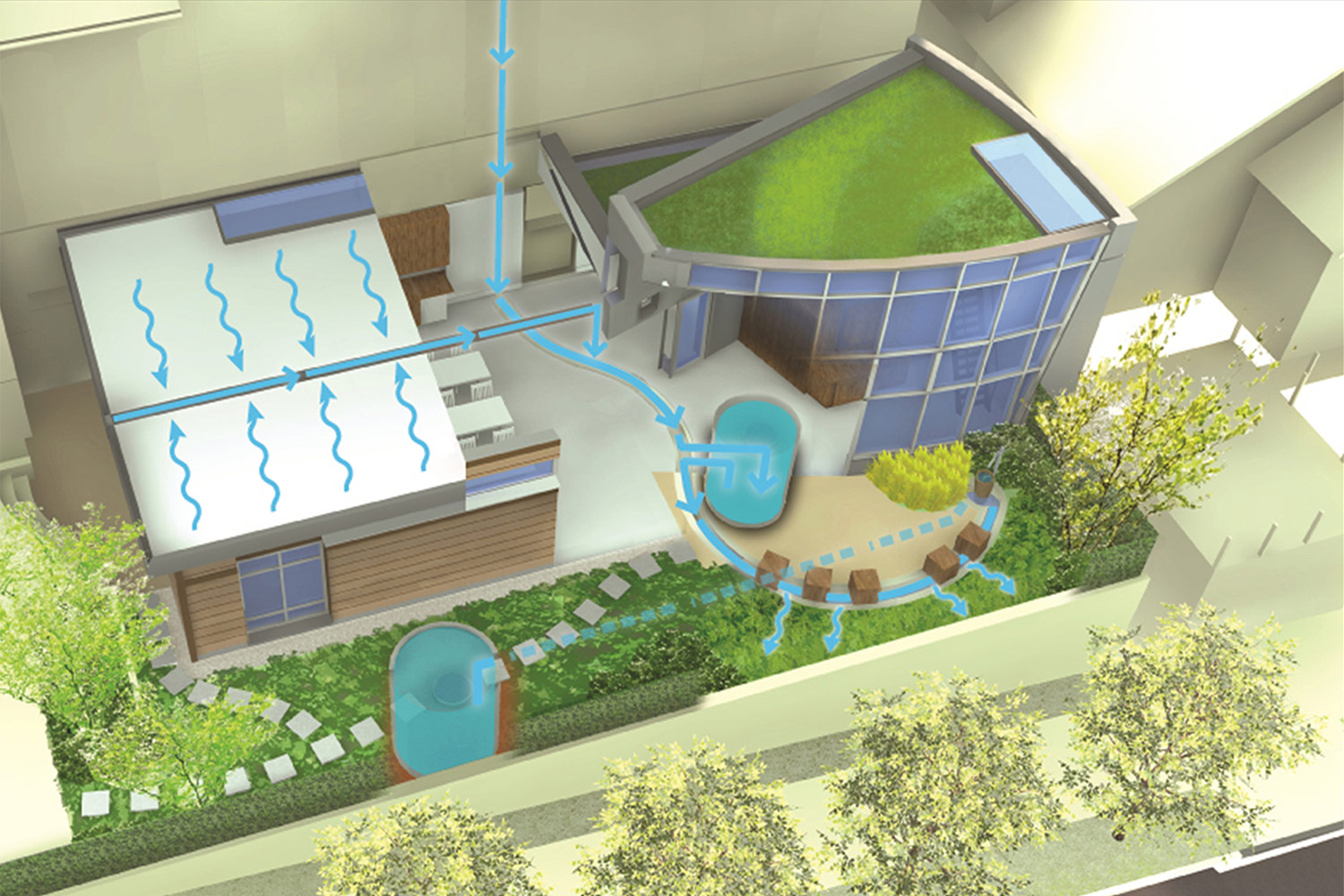
The building features two types of roofs: a metal roof and a green roof. The green roof is useful in lowering the heat island effect, while also treating stormwater. The metal roof is used to capture on-site rainwater.
WATER
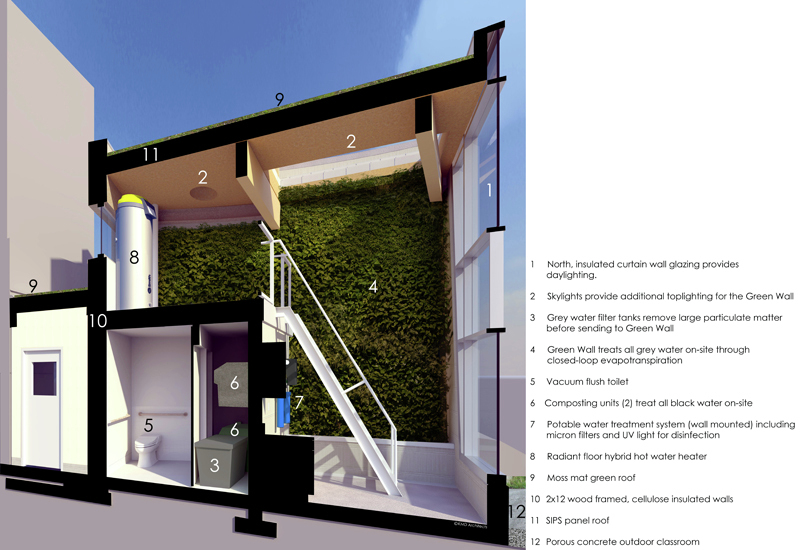
The Northwestern area of the United States frequently deals with large amounts of rainfall. The ‘indoor river’ is a directed flow of water that passes through the classroom protected by glazing, that creates a biophilic feature for the students to enjoy, as well as a rainwater management system.
AIR
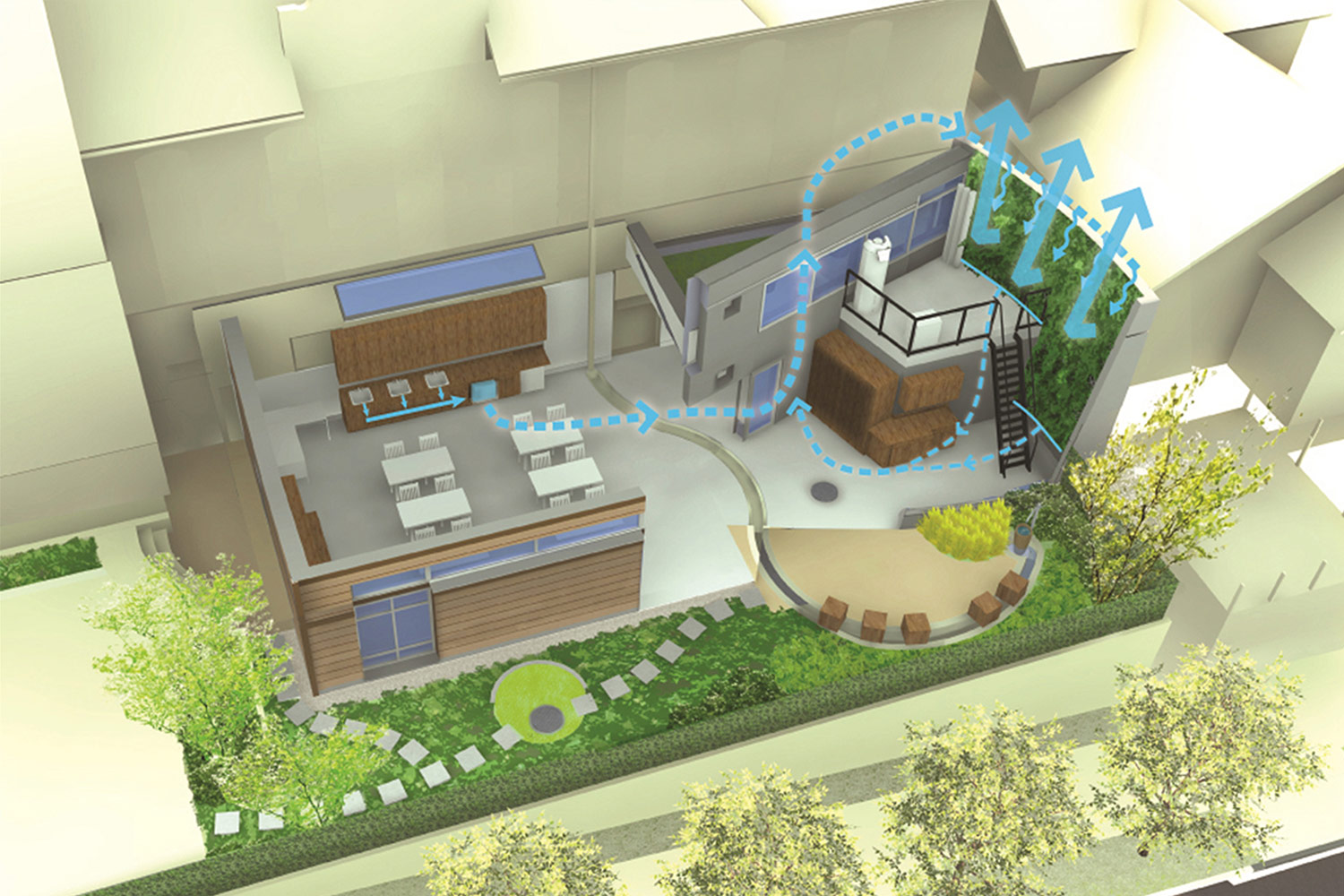
Washington State has a mild climate all year round, except for winter. As the school is on a tight urban site, and the science classroom is an extension of the existing building, access to sunlight is limited. The butterfly roof provides natural ventilation and daylight through tall windows. The greenhouse (EcoHouse) utilises glazing to provide a warm ecosystem contrasting the exterior temperatures.
PLANTS
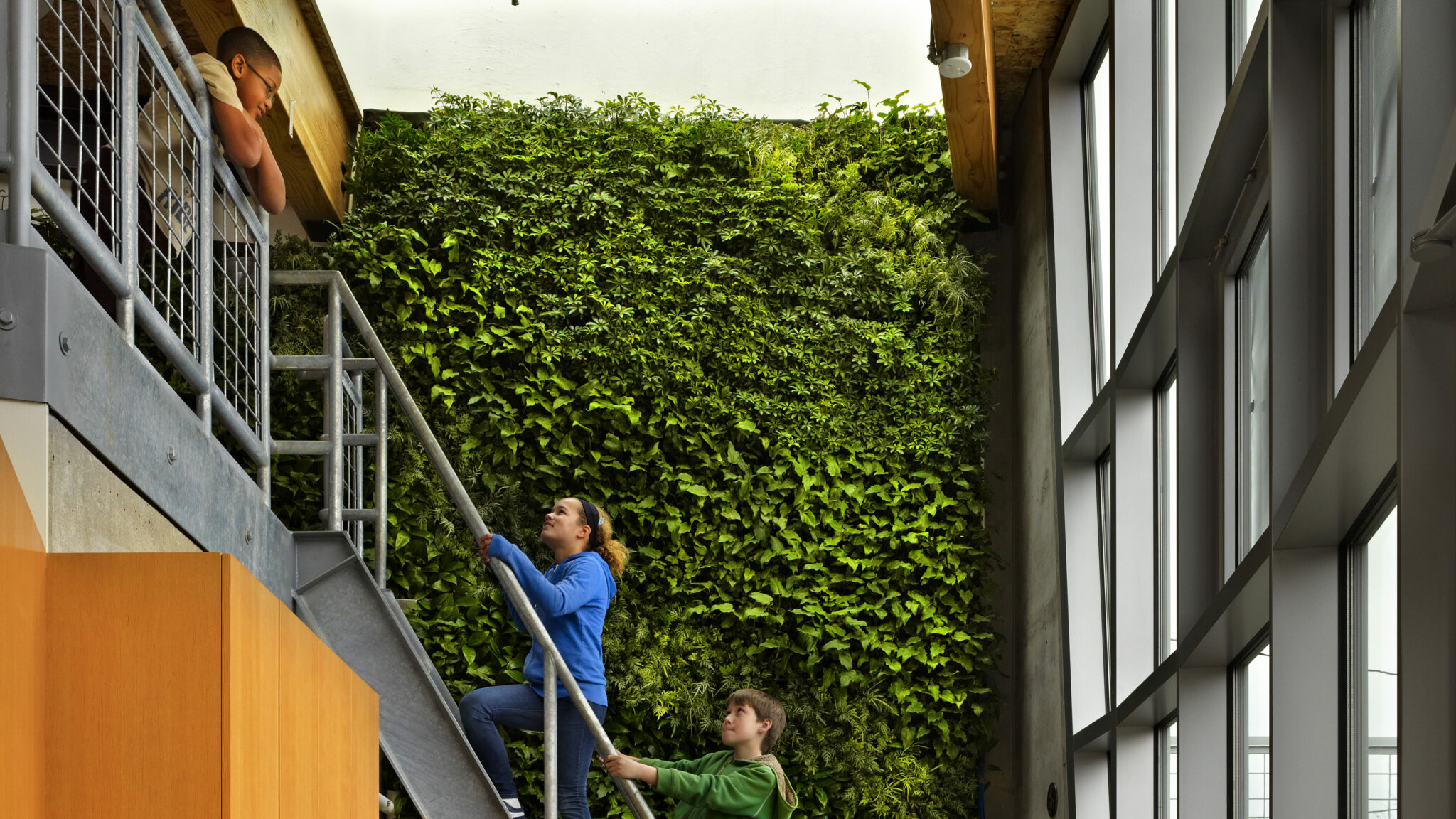
The living wall in the EcoHouse uses greywater from the building and instructs students on the ecological role plants play on our earth. Moss green roofs provide natural cover to approximately half the classroom, which can be viewed by the adjoining existing school building.
EDUCATION
The classroom itself is used as a living lesson. The incorporation of nature into daily life is physically and spiritually stimulating for the students. The cycle system allows for the children to learn about every aspect of how a building works and thrives. Observing the integrated plants provides insight into the cycle of: grow, flower, fruit and sometimes die.