
INTRODUCTION
The Hammarby Sjöstad in Sweden is an area of 200 hectares that went through urban development between 2004 and 2016. The project holds approximately 12,700 homes, 400,00 square metres of business space and 150,000 square metres of workplaces.
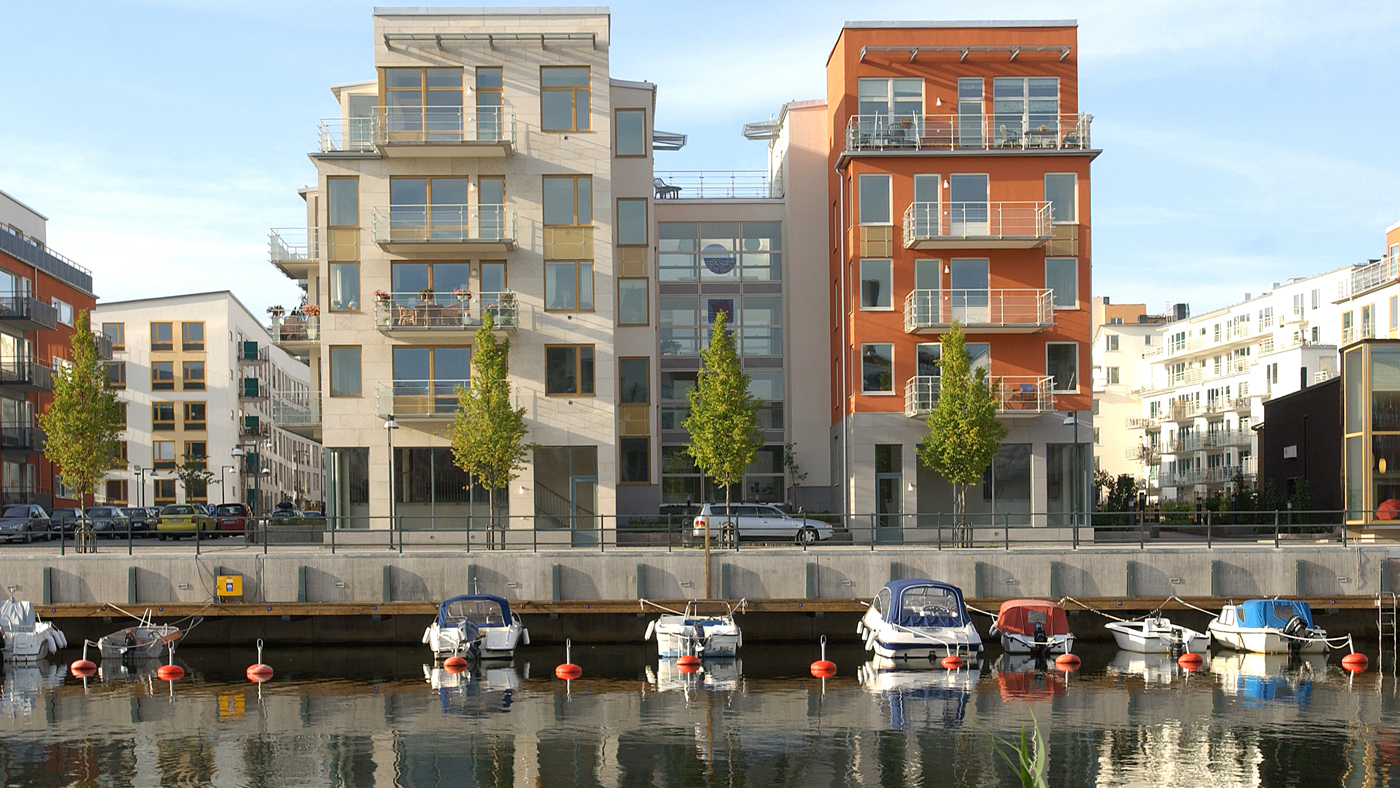
The area was originally used for industrial activities, and works continue to be developed to sustainably improve the area. The urban development plan stemmed from a potential Olympic Village, however Sweden was eventually not picked to host. This resulted in the Hammarby model in 1996, aiming to connect systems such as garbage disposal, water treatment, and electricity. The Swedish Export Council eventually developed a model for a sustainable city, based on experience in Hammarby Sjöstad.
SUSTAINABILITY
Sustainability ambitions were implemented into the first phases of the project. All electricity used in the neighbourhood comes from renewable sources. Municipal authorities, architects, urban planners, energy company Fortum, Stockholm Water Company and engineers worked in a collaborative effort to achieve sustainability goals.
Through an architectural perspective, traditional forms of urban planning were used from Stockholm’s 19th century city centre, mixed with modern design. All buildings have guaranteed views of either the sea or canal, placing importance on water-rich views. The strategy of a compact green town allows for both high density and public space, offering a high quality of life.
ENERGY
The main source of heating is district heating. 34% comes from purified waste water, 47% from combustible household waste and 16% from biofuel. Once warm water has been extracted, the remaining cold water is used for district cooling, for example in grocery stores and offices. Hammarby is also experimenting with different energy solutions. Two buildings’ public spaces currently are supplied by solar cells. One residential building is experimenting with solar panels, which supply 50% of the hot tap water annually. The Environmental Information Centre houses a fuel cell as another interesting development project, which in turn generates electricity and heat. Approximately 900 apartments in the area now have biogas cookers, where the biogas is formed from waste water treatment. Through this method, building electricity consumption has been lowered by 20%.
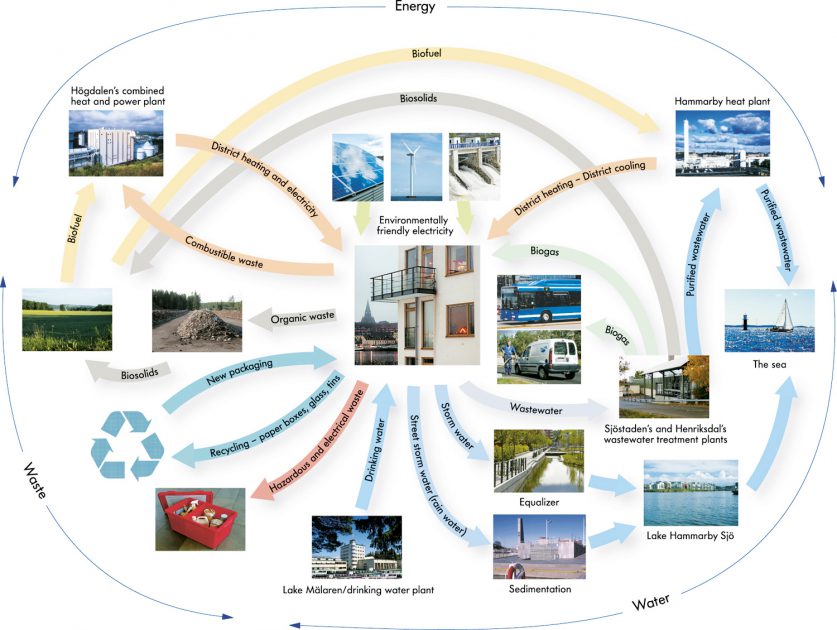
The town’s current environmental goals refer to the annual sum of all energy purchased to heat and operate public buildings. Household electricity is not included:
- District heating connection with exhaust air systems: 100, of which 20 kWh electricity/m2 UFA.
- District heating connection with heat extraction systems: 80, of which 25 kWh electricity/m2 UFA.
- The entire heating supply shall be based on waste energy or renewable energy sources.
- Electricity shall be “Good Environmental Choice”- labelled, or equivalent. [Hammarby Sjöstad, 2012]
 WATER
WATER
Sustainable water management is possible firstly through participation from the district’s residents, which includes reducing the amount of drinking water consumed and reducing the pollutants in wastewater.
GLASHUSETT
The environmental centre (Glashusett) provides locals with information and education on sustainability and advocates for further efforts to be made in order to improve lifestyle.
WASTEWATER
Wastewater is treated locally, and is used to heat and cool the residences. Residue from the treatment process is recycled and used in farmland. The biogas released is also used as fuel and heating.
RAINWATER
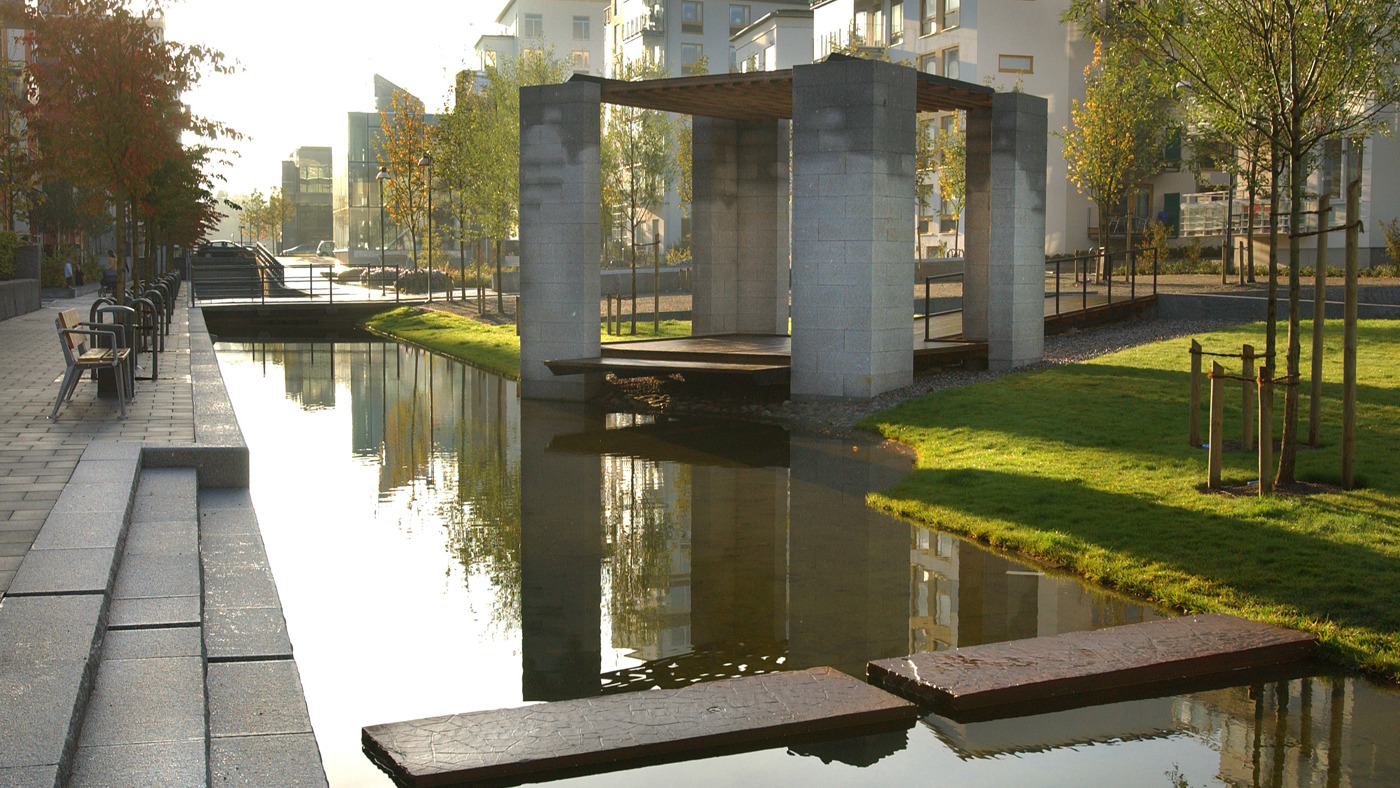
Rainwater is drained off through canals, which also serve as a design feature of the urban landscape. Some roofs also have been designed as green roofs which aid in the management of rainwater. Road runoff is treated separately before it infiltrates the ground. This model proves that water can be utilised in different ways and can be returned to the natural cycle.