
INTRODUCTION
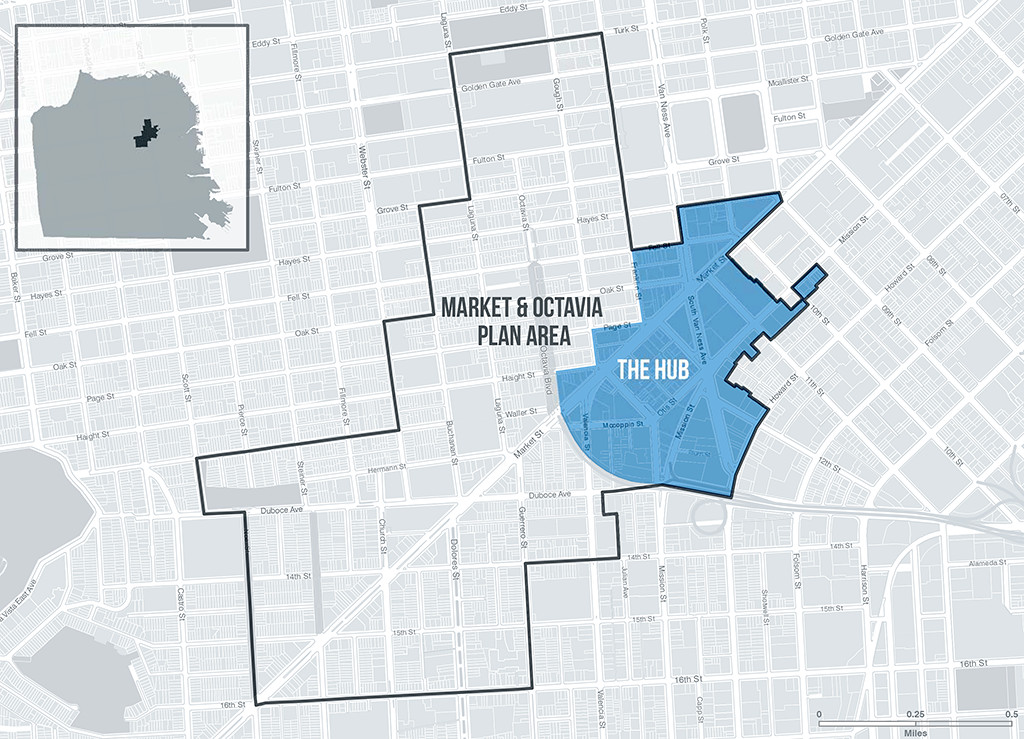
The Market and Octavia area is located in San Francisco, California. The Area Plan was developed from the Market and Octavia Neighbourhood Plan, under the City’s Better Neighbourhoods Program. The main goal of these initiatives is to make changes sensitive to existing patterns within the city and region, through objectives and policies.
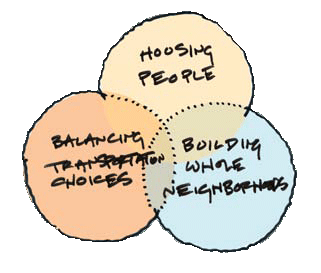 The geographical site is in the city centre, and is very accessible from the entire Bay Area through metro, bus and train. The neighbourhood is at the junction of three city grid systems: North of Market, south of Market, and Mission grids. These distinct areas collide with each other at Market Street, which create a pattern of irregular blocks and attract a high level of traffic. The surrounding hills make Market and Octavia a natural point of entry to the city.
Large infrastructure projects in the past 100 years have posed a threat to the neighbourhood. Many city blocks were stripped of their physical fabric, and the area was overcharged with heavy traffic. Street management practices have degraded over time and have made public spaces unlivable.
The Market and Octavia area is now going through renewal, mainly due to the removal of the main freeway. A surface boulevard has
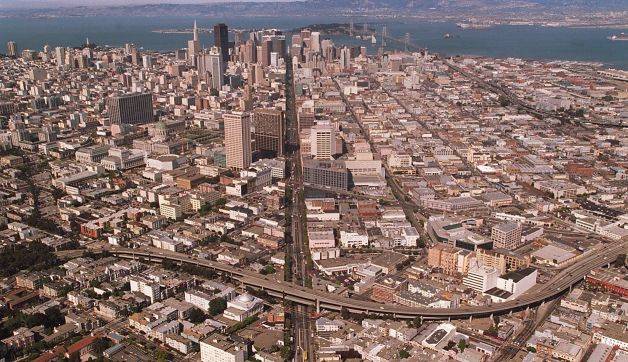
replaced the structure, and traffic flows have been better managed and redirected away from the neighbourhood. The removal of the freeway will also allow development for new housing and public amenities. The Market and Octavia area has proved that the removal of car traffic positively impacts housing, services and transit.
LAND USE
The Neighbourhood Plan envisions renewal through the implementation of objectives and policies under different subjects. In terms of land use, the requirements are:
- Require infill development to enhance the area’s established land use pattern and character
- Concentrate new uses where access to transit and services best enables people to be less reliant on automobiles
URBAN FORM
- Market and Octavia’s urban form should accentuate the city’s natural topography and emphasise transit and important activity centres.
- Buildings with a fine-grained character enhance the established physical fabric of the place and the value of streets as public spaces.
HOUSING
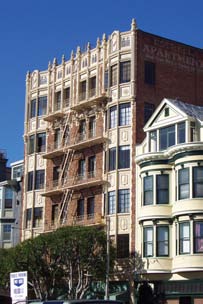
- Provide ample and diverse housing opportunities to add to the vitality of the place.
- Housing can be built more efficiently, affordably, and more consistent with neighbourhood character if parking is not required.
PUBLIC SPACES
The neighbourhood would benefit from a connection to nature. Through the development of housing and improved public space, parts of the neighbourhood can be carved out for greenery. Design elements such as building height and setback create ‘urban rooms’ where public life can thrive. The area plan outlines these principles:
- A successful open space system is carefully woven into the overall fabric of a neighbourhood’s public streets, taking advantage of large and small opportunities to create both formal and informal spaces for respite, gathering, and recreation.
- Streets that support and invite multiple uses, including safe and ample space for pedestrians, bicycles, public transit, and nature, are a more conducive setting for the public life of an urban neighbourhood than streets designed primarily to move vehicles.
BALANCING TRANSPORTATION CHOICES
- Principle: Prioritise the efficient movement of people and goods and minimise the negative effects of cars on neighbourhood streets.
- Principle: Better management of existing resources is more effective in improving service than simply increasing capacity.