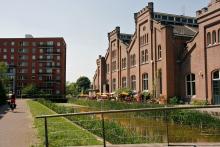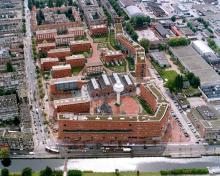
The GWL Terrein is a car-free residential area in Amsterdam comprising different homes over six hectares. All blocks were designed by renowned architects, who created an ecological district in the city. Previously to 1997, the site was used as the Municipal Water Supply in Amsterdam. The site now includes housing, live/work dwellings, and a community centre.
GREEN LIFESTYLE
The residents of GWL live a green lifestyle: garden groups, DIY days, tree maintenance, and so on. New green management plans are implemented every few years, with collaboration between the municipality and the residents. The 2022 plan discussed ecological management, the canal, the fences, the hedges, mowing policy and self-management projects.
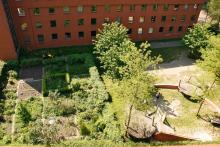
The GWL utility gardens were designed by Adriaan Geuze in 1998. The Utility Garden Association is responsible for ensuring appropriate maintenance of the utility gardens of the area through annual inspection. Overall, there are 80 small utility gardens on site over its 6 hectares, with approximately 100 dwellings per hectare. All garden users are part of the association and must sign an agreement. Residents are at liberty to grow any kind of food or herbs they would like, such as potatoes, cabbage and so on. A volunteer group of around twenty local residents are in charge of taking care of the fruit trees in the district: 46 apple, 12 pear, 5 cherry.
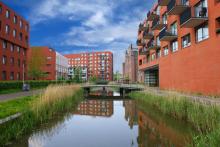
In addition to living a green lifestyle, the neighbourhood utilises architecture to achieve a comfortable and ecological environment. Windows on the North facing facade are of a smaller dimension, while the South facade includes large windows to allow sunlight to penetrate into the living spaces.
FROM WASTE TO HARVEST
GWL also facilitates recycling. All vegetable and fruit waste can be handed in to the compost drums on site, which are open to both residents and the surrounding community. This valuable material is then used in green areas, utility gardens, and so on.
EFFECTIVE REUSE
The water tower was built in 1967, and is still in use today. Its function was converted to be used in case of a sudden peak in demand for drinking water. It has also become the landmark of the district.
The entrance house and machine pump building also were converted into offices and cafes to be more useful to residents.
Originally the warehouse for municipal water supply, block 3 was converted into one of the numerous ecological apartment complexes in the district. The architects and residents worked in unison during the conversion. The Magazijn Foundation organises performances in the main hall, which are also open to the public.