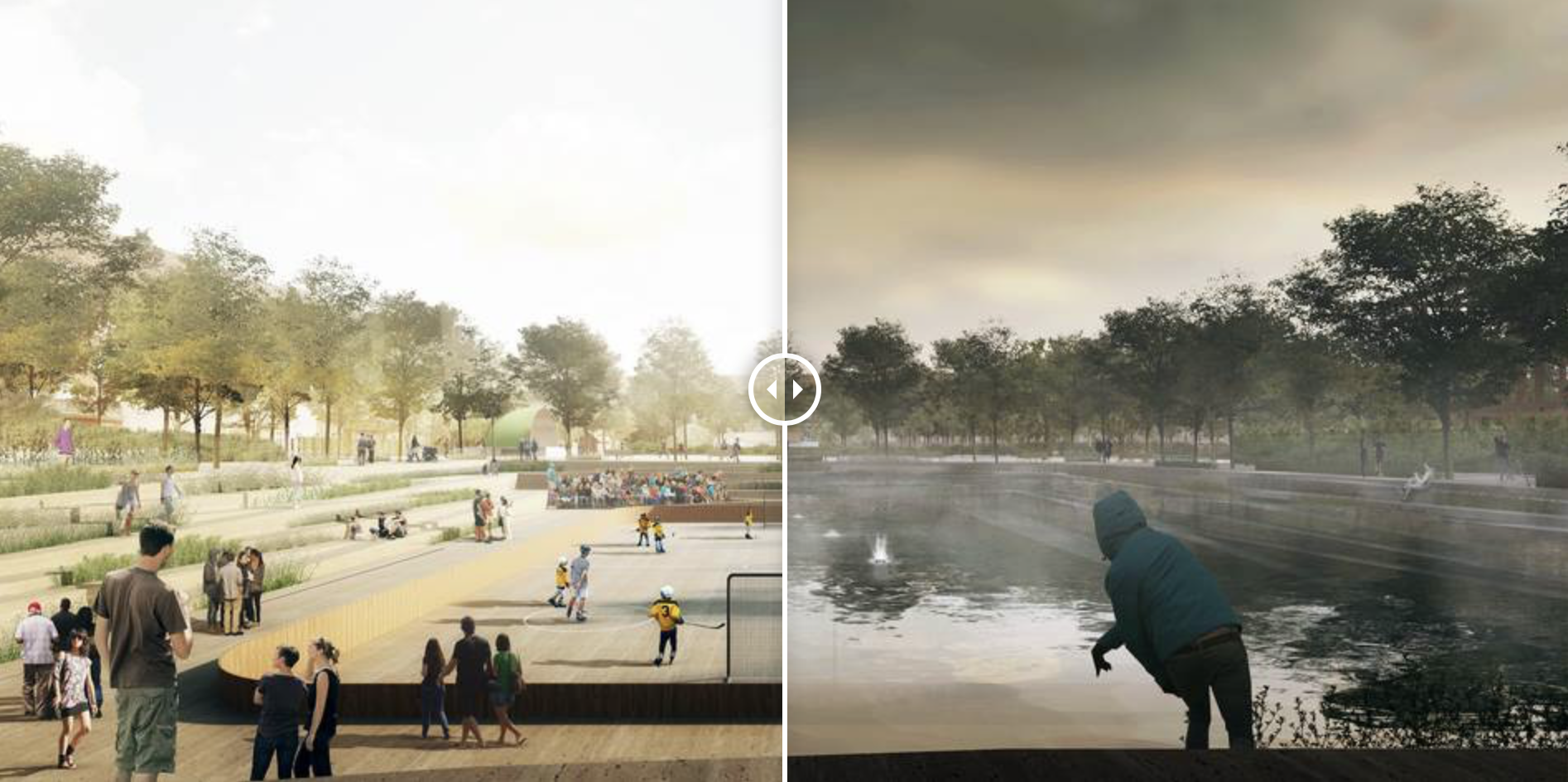
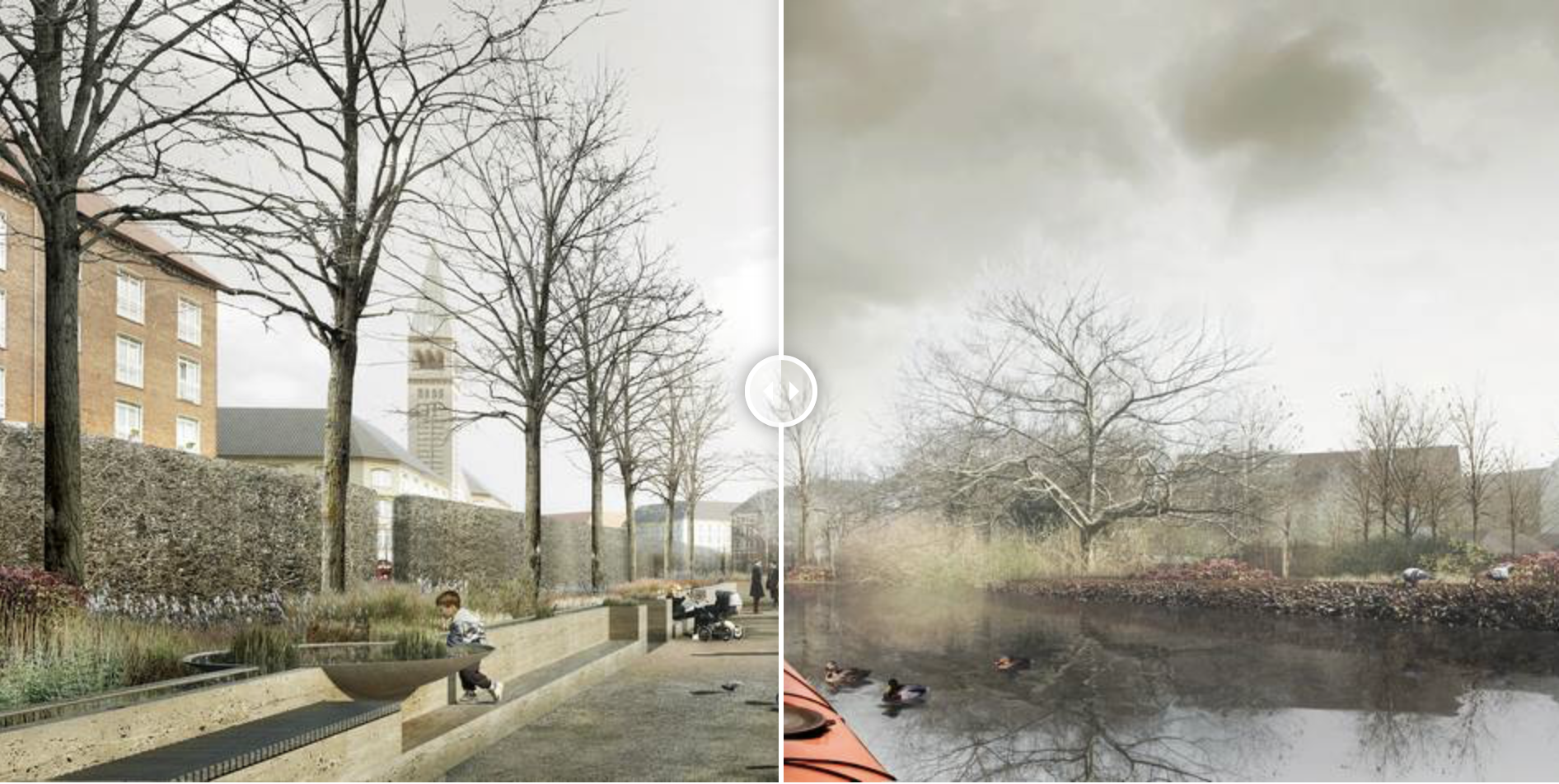
The historical Enghavepark has been transformed and is now the biggest climate project in Copenhagen. With a 22.600 m3 water reservoir, the park is answering a need to handle Copenhagen’s current and future challenges with water. With an optimistic and playful mindset, we have redefined these challenges to offer plenty of new opportunities for recreation, exercise, and sensuous experiences, both for everyday life and in case of extreme rain.
HISTORICAL BREATHING SPACE
Enghaveparken opened in 1928 and is a physical manifestation of the early welfare state in Denmark, giving light, fresh air, and greenery to the local population in Vesterbro, Copenhagen who was cramped together in small, lowly maintained apartments. In the 50s, the park was a popular hang-out for the young generations meeting for outdoor dances to early rock n’ roll. But as Copenhageners in the recent decades gradually got more indoor- and courtyard space, the park became more and more obsolete. In the 2010s Copenhagen – and Vesterbro in particular – has been hardly hit by cloud bursts resulting in floods and extremely costly damages.
With Enghaveparken’s location at the bottom of a hill, the park has become a strategic location in the handling of extreme rain. Copenhageners in the recent decades gradually got more indoor- and courtyard space, the park became more and more obsolete. In the 2010s Copenhagen – and Vesterbro in particular – has been hardly hit by cloud bursts resulting in floods and extremely costly damages. With Enghaveparken’s location at the bottom of a hill, the park has become a strategic location in the handling of extreme rain.
TIMELESS ARCHITECTURE MEETS CLIMATE-ADAPTIVE INNOVATION
Enghaveparken opened almost 100 years ago with works from a young Arne Jacobsen. With the new Enghavepark, several of Jacobsen’s early works have been restored and two functionalist pavilions have been reconstructed. The architectonic strength of the park lies in the integration of the massive water volumes within the neoclassicist aesthetics of the park, and thereby the park becomes the first of its kind. Hereby, we show how we can simultaneously preserve and rethink our shared cultural heritage when the climate crisis hit our cities.
The new atmospheric handling of the water opens for a both pragmatic, sensuous, and aesthetic narrative that we hope can give inspiration to new reflections on the climate. When the next case of extreme rain hits and fills up the parks 35.000 m2 in a continuous water reflection, it is both a water technological and architectural accomplishment and a return of nature in a new type of urban metabolism.
A TIGHT FRAME AND WILD NATURE
Enghaveparken is a green breathing space for people and animals. The urban nature is for everyone, a picnic on trimmed grass, for people/visitors who enjoy flowers in all seasons, and people who pass by. 83 new trees have been planted in the park, spread across 10 different varieties. Most are planted in connection with the re-establishment of the alleys.
The biodiversity in the garden is further enhanced by the 11,000 perennial plants, consisting of 55 different varieties in the Library garden as well as 950 fragrant roses planted in the Rose garden. All over the park 220,000 bulbs have been planted, which together with the rest of the planting will help make the park attractive to the eye and mind all year and create habitats for urban wildlife as insects and small animals.
Source: https://www.tredjenatur.dk/en/portfolio/enghaveparken-climate-park/
A GREEN URBAN SPACE FOR EVERYONE
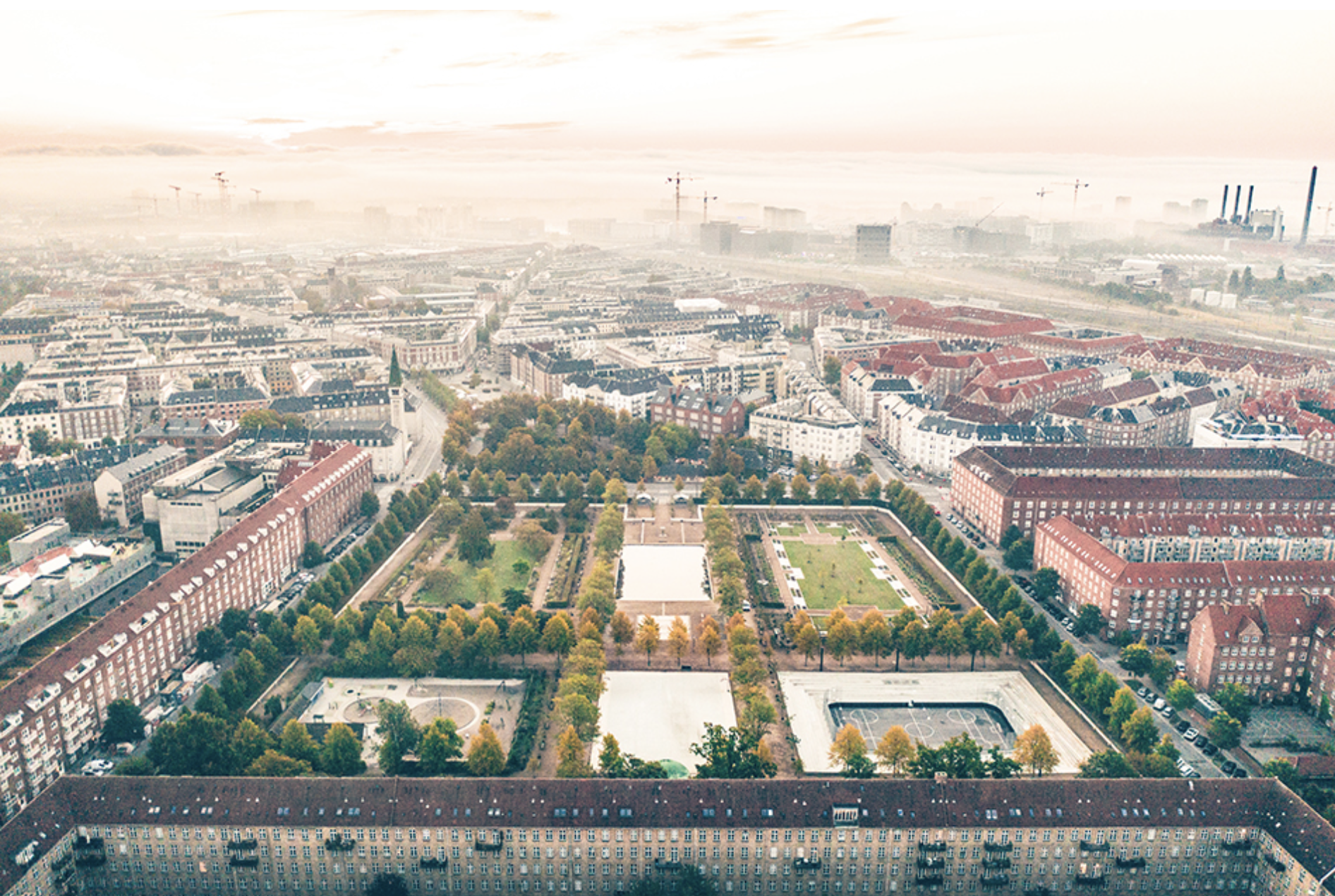
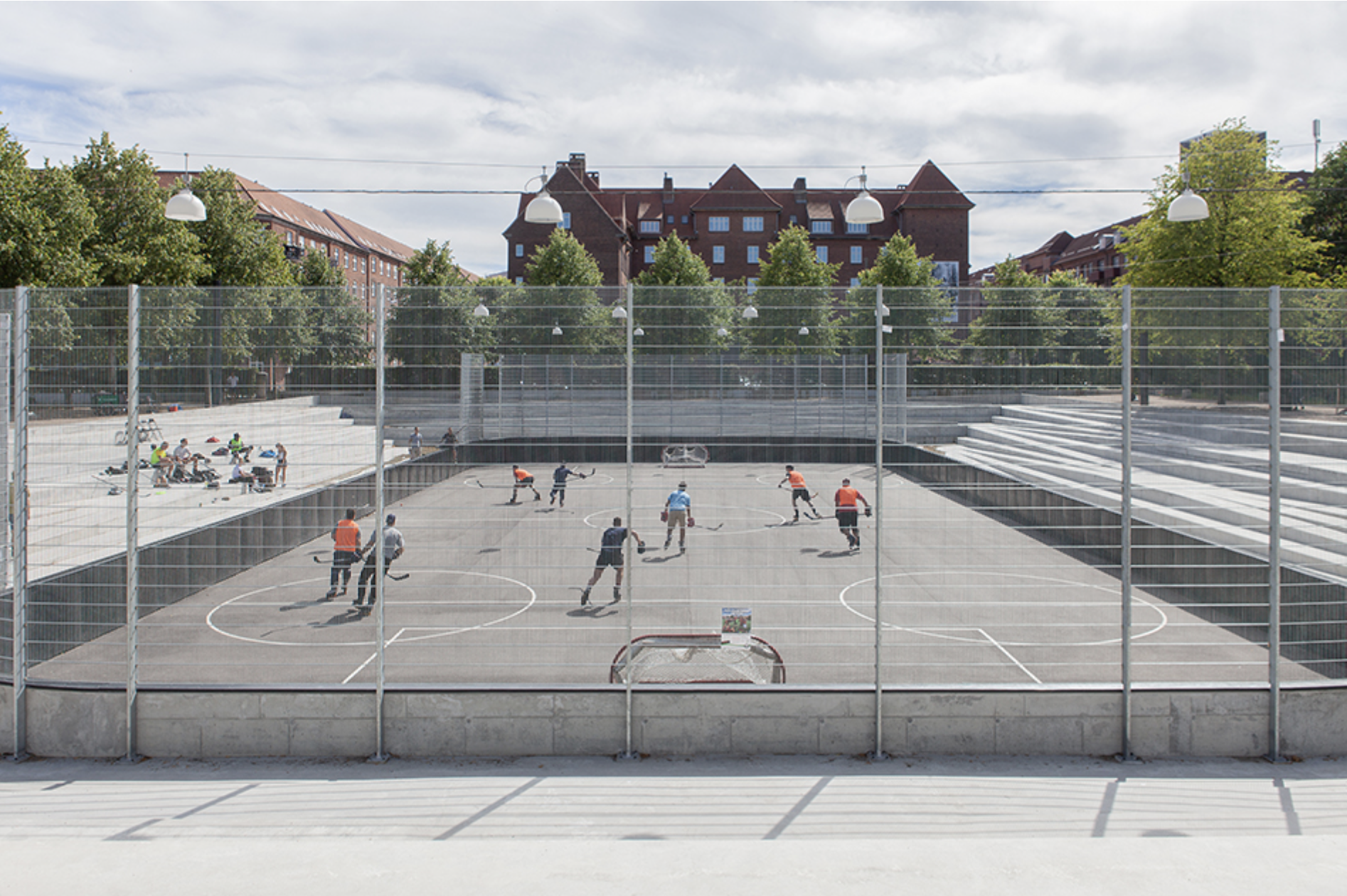
With the multi-purpose pitches, Vesterbro gets a new urban space for street sport and concerts. By the rose gardens, it’s possible to sit down and rest in beautiful surroundings or play petanque. With the playground, the park gives a necessary breathing space for families with young children in the densest neighbourhood in Denmark. In one of the two reconstructed pavilions by Arne Jacobsen, it will be possible to buy a coffee or an ice cream during the summer, while the other pavilion functions as a meeting place for cultural activities. With the parks many different possibilities, it can offer something to the everyday life of all Copenhageners, no matter what one’s situation is. Before the renewal of Enghaveparken, the park has a million yearly visitors. With the development in the nearby Carlsberg City and the new metro stop on Enghave Square, that number is expected to increase in the coming years. We hope even more people will be enjoying the new Enghaveparken.
RAINWATER AS A SENSUOUS RESOURCE
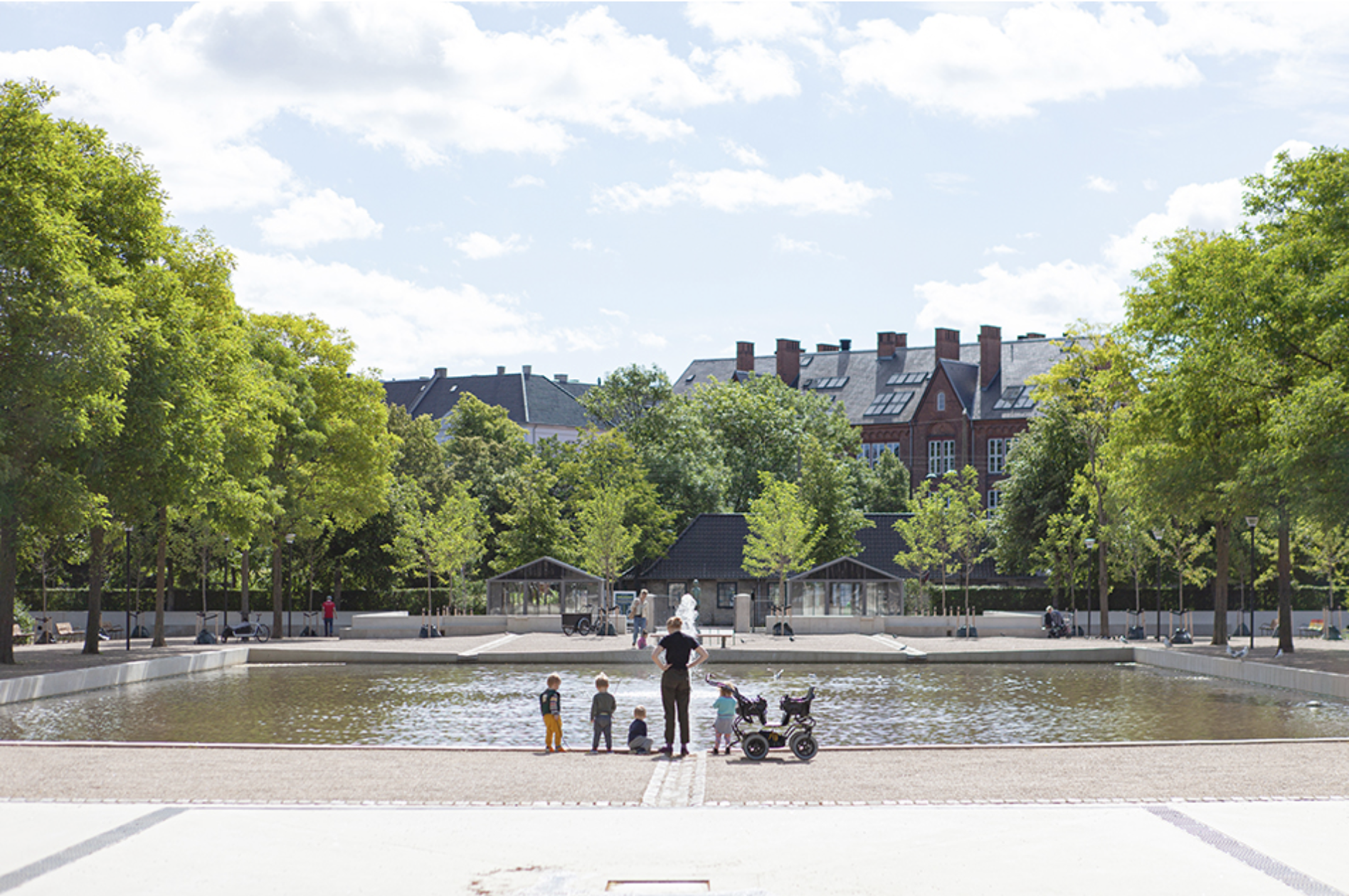
When it rains within normal measures, the rainwater from the nearby roofs will be led to the park and a 2000 cubic meter retention basin. Here, the rainwater will be stored and used for watering a diverse range of plants and trees during dry spells and can even be used to clean the streets of Copenhagen, the water being transferred to municipal maintenance cars. At the same time, the rainwater is handled above ground in the multifunctional cloudburst reservoir and the encircling dike.
The rainwater is circulated in a channel on top of the dike, so visitors can run their hands through the water and the water is also utilised in an adjacent fountain garden where kids can play. With this re-use of rainwater, we save millions of litres of groundwater, which is the usual source of water for recreational purposes. When the retention basin empties after extended dry periods, the recreational water functions disappear. Hereby, we are coupling the technical water solutions with a sensuous dimension and a causal understanding of resources.
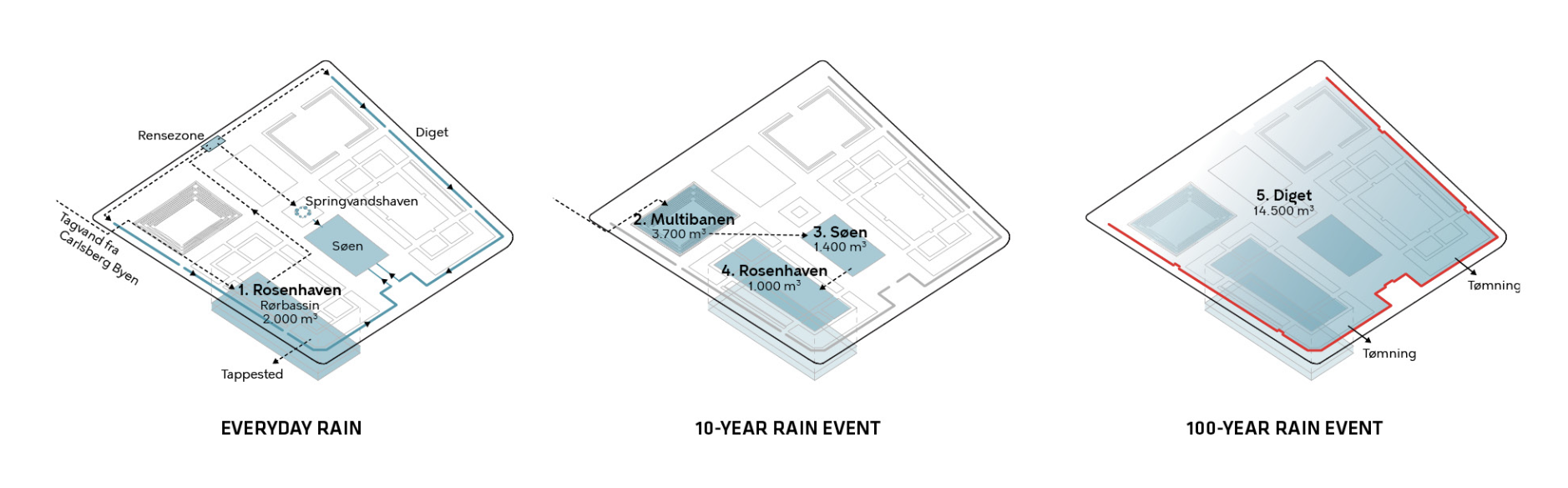
With the new Enghaveparken, have been made room for 9.000 cubic metres of rainwater by excavating within the neoclassicist structure of the park. On top of that, a low was been built along the perimeter of the park, to hold back further 14.000 cubic meters of water with a mechanism that automatically pushes up the gates of the perimeter wall so that the climate adaptive elements of the park function – even without electricity. In case of extreme rain, the automated gates will shut down the park to the public, and the park will mirror the adjacent buildings while sparing them from the extreme rain.